Get Full Government Meeting Transcripts, Videos, & Alerts Forever!
Get email alerts on the Municipal Finance topic
No spam. Unsubscribe anytime.
Geneva council approves ordinance addressing outstanding vehicle loan amid higher interest costs
Summary
At a June 23 special meeting, the Geneva City Council approved Ordinance 3385 to address an outstanding vehicle loan. Council members discussed a rise in interest from 2.6% to 4.74% and a remaining principal balance the city reported as roughly $673,000; the meeting included questions about payment timing and prior deals.
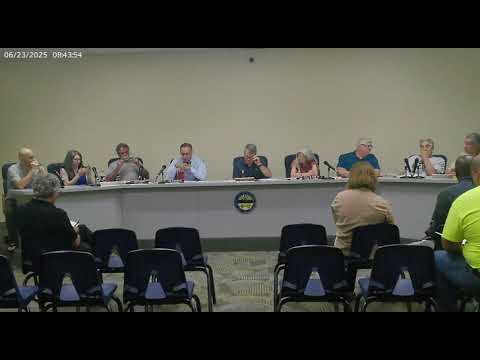
The City of Geneva Council on June 23 approved Ordinance 3385 to address an outstanding city vehicle loan, following council discussion about higher interest rates and remaining principal.
The ordinance, discussed and moved at the special meeting, concerns repayment of a loan tied to a city truck and the city’s outstanding bond balance. Council members raised questions about the interest rate increase from a prior rate the council described as 2.6 percent to a current rate the meeting recorded as 4.74 percent and about the timing and size of upcoming payments.
Councilmember Baker asked for clarification of the announced figures and called the original financing “a terrible deal,” saying he was not on the council when the contract was made. Council members and staff discussed a reported remaining balance of about $673,000 and a first payment shown in meeting documents as $94,000. A council member noted a past balloon payment figure of roughly $664,804.6 and described prior totals mentioned in the meeting as near $900,000 originally, with about $200,000 already paid.
City staff said the prior bond rate was 2.6 percent and the new rate is 4.74 percent, and that the council was informed at a previous meeting that interest rates would increase. Staff also said donations and capital accounts affected how prior payments were handled. Councilmember questions focused on how the higher rate would affect annual payments and whether the city had adequate capital reserves.
Council members voted to waive the three-reading rule and to declare an emergency, and a roll-call vote recorded affirmative votes for council members present; the ordinance passed. The clerk was directed to follow normal post-passage procedures for an ordinance taking effect as allowed by law.
Discussion only and decisions were recorded separately during the meeting: several council members raised concerns and sought clarifying figures (discussion), staff provided accounting clarifications (direction), and the council took formal action to pass the ordinance (decision).