Get Full Government Meeting Transcripts, Videos, & Alerts Forever!
Get email alerts on the Literacy And Assessments topic
No spam. Unsubscribe anytime.
Methuen leaders highlight mixed literacy benchmark results, promise CKLA and follow‑ups
Summary
District leaders presented a quarter‑four literacy update showing gains in K–1 and uneven results in grades 3–5 and above. The report used DIBELS for K–3 and Reading Plus/DreamBox for upper grades; board members pressed for more disaggregated data and clearer parent communications on benchmark results.
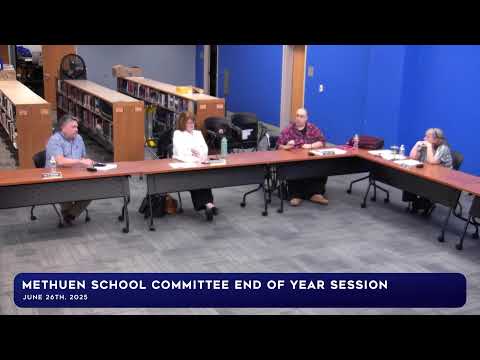
Superintendent Dr. Quang and district administrators presented end‑of‑year literacy benchmark data at the June 26 meeting, saying the district saw strong growth in kindergarten and first grade but more mixed results in grades 3–5 and the upper grades.
The district’s curriculum supervisor reviewed several measures: DIBELS benchmark results for K–3 and Reading Plus (DreamBox) benchmark results for grades 4–8. The presenter said DIBELS shows “green” and “blue” growth in kindergarten and first grade, and she expressed concern that DreamBox’s automated reading‑rate metric had inconsistent values in some cases and required careful interpretation.
Why it matters: literacy benchmarks guide classroom groupings, reading‑specialist assignments and curricular choices; discrepancies among measures and conversations about retesting influence instructional planning and parental communications.
Assessment highlights and concerns
- The presenter told the committee the DIBELS results for K–1 showed meaningful growth from fall to spring and that she was “very encouraged” by that pattern. She said the district will confirm the published class‑size numbers and share the final memo publicly.
- For grades 4–8, the district used Reading Plus (DreamBox/Insight). The presenter said average proficiency and comprehension rose year to year in several upper grades and that some cohorts showed gains that exceeded one year of expected growth; however, the presenter also noted anomalous reading‑rate values in the DreamBox export and said the comprehension column was more reliable.
- Board members and some teachers questioned test administration and data accuracy. Member Maxwell repeatedly urged caution about equating the district’s internal benchmark percentages with MCAS or state proficiency. She said where benchmark results appeared inconsistent the district had retested some students; administrators explained retesting is used when an assessment appears to have been administered or completed in a way that produced unreliable results.
- The superintendent said a district curriculum purchase — Core Knowledge Language Arts (CKLA) — will provide a more consistent assessment and curriculum alignment in selected grades next year, and that the district will use screenshots and disaggregated exports so the committee and community can see the actual benchmark outputs.
Instructional follow‑up and communication
Administrators said they will send final class‑size and staffing grids to committee members and the broader faculty. They also committed to providing parents with benchmark results and interpretation when assessments are administered, and to continuing professional development and classroom‑level grouping (reading success blocks) so teachers can respond to student needs.
Discussion vs. action: the meeting discussion was informational; there were no votes tied to assessment changes or curriculum contracts during this session. The curriculum team said it will return with finalized class‑size confirmations and additional disaggregated data in the coming weeks.
Ending: committee members welcomed the K–1 gains while continuing to press for transparent, disaggregated reporting and for a plan to address persistent gaps for English learners and students with disabilities.