Get Full Government Meeting Transcripts, Videos, & Alerts Forever!
Get email alerts on the Comprehensive Plan topic
No spam. Unsubscribe anytime.
Lexington hires regional planning commission to update comprehensive plan; first public sessions planned
Summary
Lexington contracted the Central Shenandoah Planning District Commission to lead a light update of the city's comprehensive plan. The PDC will collect data, hold three public engagement events and coordinate chapter-by-chapter reviews with the planning commission, with a target to finish by the end of 2025.
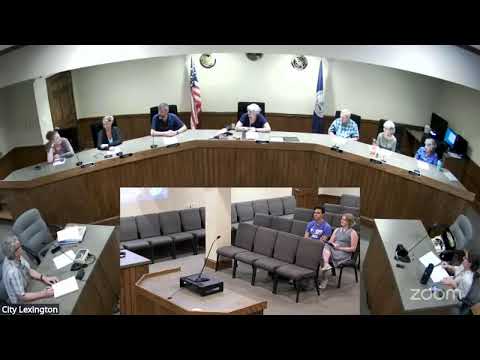
Jeremy Crew, director of planning for the Central Shenandoah Planning District Commission, told the Lexington Planning Commission on June 26 that the city asked the PDC “to help, lead and facilitate … to update the city's comprehensive plan.”
The presentation explained that Virginia law requires municipalities to maintain a comprehensive plan and to update it on a five‑year cycle; Lexington's last full update was completed in 2020. Crew said the city’s update will be a lighter refresh rather than a complete rewrite because the 2020 plan remains largely current.
Crew described the plan as “a tangible representation of your community's desired future,” and said the PDC will handle data collection, mapping and drafting while working closely with city staff and the planning commission. He said the transportation chapter has additional state requirements and will undergo review by the Virginia Department of Transportation, which has 90 days to review that chapter after it is submitted.
The PDC outlined a process that includes a baseline inventory, goals and measurable objectives, and implementation strategies. Crew said the PDC typically conducts at least a survey and two public engagement meetings, but added that Lexington contracted for three public events; the PDC will present draft chapters at commission meetings and asks commissioners to review and provide local knowledge and feedback.
Commissioners pressed Crew on measurability. The chair, identified in the meeting as the planning commission chair, asked, “Do you all work on creating measurable goals?” Crew said metrics are often most useful at the objective or strategy level and offered to incorporate associated metrics so future commissions can track progress.
Commission discussion raised specific local topics to include in the update: entrance corridors (Route 60 and Route 11), a parcel off Maple Lane noted by residents, concerns about “institutional creep” in a town‑and‑gown setting, and green infrastructure and local initiatives such as the Healthy Green Neighborhoods effort. Crew said the PDC can compare Lexington’s data to Rockbridge County and to other similar or aspirational communities and can identify potential partners and funding sources for strategies.
Crew proposed a timeline of roughly two chapters per month for a lighter update and suggested holding an initial community engagement session in late July; commissioners and staff confirmed the PDC will attend monthly commission meetings to present chapters and receive feedback. City staff said they will provide the PDC with existing plan files, an implementation chart and a to‑do list to support drafting.
No formal vote or ordinance was taken at the meeting. The commission accepted the presentation and directed staff to provide existing materials to the PDC and to coordinate the first public engagement session.