Get Full Government Meeting Transcripts, Videos, & Alerts Forever!
Get email alerts on the Child Welfare Funding topic
No spam. Unsubscribe anytime.
Hunt County Child Welfare Board asks commissioners for $40,000 annual allocation
Summary
Celeste Prather, representing the Hunt County Child Welfare Board, presented a year‑long accounting of local child welfare expenditures and asked the county to raise annual funding from $20,000 to $40,000 to cover services the board provides for children not eligible for other public funding.
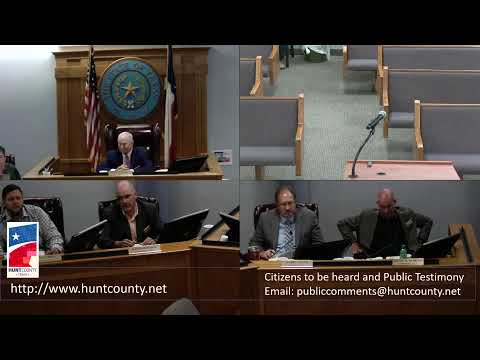
At the June 27 Hunt County Commissioners Court meeting, Celeste Prather, representing the Hunt County Child Welfare Board, outlined the board’s spending and requested that the commissioners increase the county’s annual allocation from $20,000 (budgeted in 2015) to $40,000 to meet current needs.
Prather summarized the board’s role under Texas Department of Family and Protective Services guidance and described how local funds are used for items not covered by state or federal programs, including clothing, transportation, emergency moves, specialized medical and therapeutic care, school supplies, and the county’s “Rainbow Room” inventory. “Since that time, we have there have been no increases requested. Today in 2025, we respectfully request 40,000 annually to be allocated monthly to sustain the current projected needs for the youngest and most vulnerable citizens of your county,” Prather told the court.
Prather presented a one‑year expenditure total of $50,001.91 for April to April and broke the spending down by category: about $12,008.80 for the Rainbow Room; roughly $8,858 for medical expenses (including an out‑of‑state emergency dental procedure for a child placed in Arkansas); childcare, travel and move assistance; transportation; and targeted therapy when the state’s standard services did not meet a child’s needs.
She described changes that affect local spending levels: House Bill 567 (reducing removals by raising the threshold for neglect to “immediate danger”), the state’s community‑based care rollout and problems with the Empower case‑management system that, in her view, increased short‑term local expenditures. Prather said the board is largely volunteer‑run (seven volunteers) and that most county money goes directly to children and families rather than overhead.
Prather said the board has launched a school‑supply campaign to replace a statewide program that no longer operates in Hunt County; she estimated the school‑supply effort could cost about $8,000 and reported $3,000 pledged so far.
Commissioners asked about other funding sources and oversight: Prather said the board receives small private donations (churches and individuals) and is audited, with oversight from the state child welfare board. She also said the local body is established through the commissioners court rather than as an independent nonprofit. The commissioners did not take a funding vote at the session; they questioned budget lines and asked staff to provide follow‑up information as part of overall budget deliberations.
The meeting record shows no formal appropriation during this session; the request will be considered as part of the county’s broader budget process.