Get Full Government Meeting Transcripts, Videos, & Alerts Forever!
Get email alerts on the Permanent Supportive Housing topic
No spam. Unsubscribe anytime.
Kenmore committee hears provider advice on planning permanent supportive housing; costs, operations highlighted
Summary
Kenmore’s Housing Advisory Committee on June 1 heard detailed, practical guidance from nonprofit providers and county staff on how a small city can prepare for permanent supportive housing (PSH) projects.
Kenmore’s Housing Advisory Committee on June 1 heard detailed, practical guidance from nonprofit providers and county staff on how a small city can prepare for permanent supportive housing (PSH) projects.
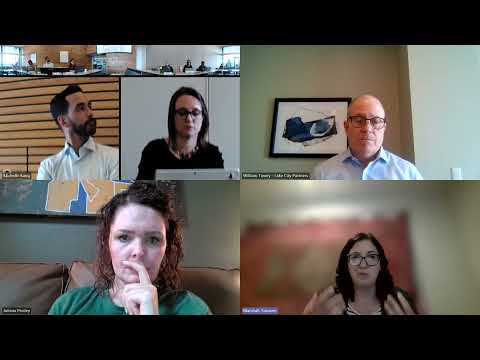
The panel — including Tina Allison, director of housing and housing services at Compass Housing Alliance; William Towey, executive director of Lake City Partners; and Sunari Marshall, division director for housing and community development at King County — told the committee that clear city signaling, streamlined permitting and early community engagement are critical to successful PSH siting and operation.
“Being able to communicate and meet with providers … and understanding what their needs might be” helps projects move forward, Sunari Marshall said. Marshall added that regional partnerships and tax-credit flows support capital financing but that “any city that is interested in setting aside their own pool” for operations or capital is “incredibly welcome.”
Why it matters: Panelists stressed that PSH is housing and that planning choices made now determine whether Kenmore can both site and sustain projects. They warned that capital funding is only half the work: ongoing operating subsidies, appropriate site selection, staffing and insurance affect whether a project remains viable.
Key takeaways
- Signal local support and reduce procedural friction: Providers urged Kenmore to identify a single permitting liaison, coordinate across public works, transportation and utilities, and clarify siting and administrative processes so developers and operators can move faster.
- Make operating funding realistic: Providers gave several cost benchmarks. Tina Allison said typical PSH operating costs are often estimated at about $25,000 per unit per year but can run into the $30,000–$40,000 range; Allison also said Compass’s PSH retention rates exceed 90 percent. William Towey and others urged the committee to ensure long-term operating commitments before approving capital investments.
- Design and service match matter: Panelists recommended prioritizing transit access, accessible entrances and durable plumbing and fixtures. Allison and other operators recommended two-stage secured entries, 24-hour staffing or front-desk coverage, camera systems, and on-site or nearby clinical partnerships for medical and behavioral-health needs.
- Smaller projects can make sense locally: Several panelists said smaller, well-operated projects (roughly 30–50 units) can be easier to manage in smaller cities than a single large project, although they noted funding sources (especially low-income housing tax credits) often favor larger developments.
- Community engagement and “good neighbor” practices reduce conflict: Regular outreach, a public contact number, quarterly check-ins with neighbors, and a written neighbor agreement were cited as common practices. "Start off quarterly and give some ability for it to ramp down if nobody's showing up anymore," one provider said.
- Legal and zoning constraints to avoid: Sunari Marshall reminded the committee that state law requires PSH to be treated as housing where multifamily housing is allowed and cautioned against special spacing rules or additional requirements that could be vulnerable to legal challenge under fair-housing or disability protections. Panelists recounted a prior local example where spacing rules could have blocked a large PSH project because a small church shelter applied first.
Numbers and system context cited at the meeting
- System scale: A panelist estimated the regional PSH system holds roughly 5,000–7,000 units, with roughly 800–1,100 new units opening per year. - Retention: Allison and other operators reported housing-retention rates for PSH portfolios above 90 percent. - Example building sizes: Operators described portfolios including buildings with 60–80 units and smaller, targeted properties for veterans, seniors or family units (examples included a 60-unit mixed-income building with 18 family units). - Operating-cost example: Allison said an example 50-unit building could require on the order of $1.25 million per year in operations to “squeak by,” illustrating the gap between tenant-paid rent and total operating needs.
Discussion points raised by the committee and panelists
- Funding mix and braided funding: Providers discussed Medicaid-billable health services, project-based vouchers, state and federal tax credits, and county operating grants. Panelists warned that uncertainty in federal voucher policy and rising insurance costs are immediate risks to long-term budgets.
- Service match and diversity of need: Panelists emphasized PSH serves diverse subpopulations (seniors, people with behavioral-health disabilities, veterans, families) and that a single design or model will not fit all needs.
- Design best practices: Durable fixtures, induction cooktops, bathtubs for accessibility, courtyard/outdoor space for community-building, and secure visitor sign-in procedures were all recommended.
- Senior and family housing gaps: Panelists urged Kenmore to consider very-low-income senior housing and family options at the 30%–60% area median income (AMI) bands; several providers noted existing shortages and the difficulty of financing ultra-low-income senior units.
Directions and next steps
Committee staff said they will draft a memo of recommendations to the City Council reflecting the panel’s guidance; panelists offered to supply sample good-neighbor agreements, security-plan templates and design checklists. Staff asked committee members to forward any remaining questions to city staff for written follow-up.
What the committee did not decide
No formal votes or regulatory changes were made at the meeting. The session was advisory and focused on information-gathering and drafting recommendations for the council.
Ending
Panelists urged Kenmore to “start with something” and to pair modest capital commitments with realistic, durable operating funding and community outreach so the city can move from planning toward delivering housing for its most vulnerable residents.