Get Full Government Meeting Transcripts, Videos, & Alerts Forever!
Get email alerts on the Comprehensive Plan topic
No spam. Unsubscribe anytime.
Fort Myers Beach leaders seek direction on comprehensive plan, land‑development code amid state deadline
Summary
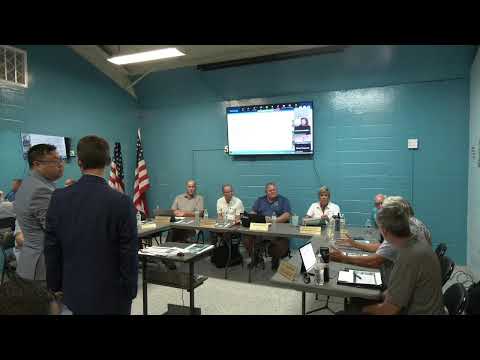
Fort Myers Beach Town Council and the Local Planning Agency met June 26 to review a proposed comprehensive plan update and parallel land development code rewrite and to give staff direction on a vision statement, timing and implementation tools ahead of a state second‑reading deadline.
Fort Myers Beach Town Council and the Local Planning Agency met June 26 to review a proposed update to the town's comprehensive plan and a parallel rewrite of the land development code, with consultants urging elected officials to confirm a vision so staff can finish regulatory drafts ahead of a state second‑reading deadline.
The meeting centered on results from public workshops and an online survey, implementation tools in the code, and policy tradeoffs affecting building height, coastal flood resilience, small‑lot redevelopment and the local economy — all themes council members said must be balanced in the final plan.
Consultant Eddie Nang of the Coronado Group summarized outreach and timing: the project team held two library workshops, staffed an island concert and ran an online survey that drew 118 responses. Nang said the town secured an extension with state reviewers but that extension has lapsed and “we are on a very much a ticking time clock right now.” He told council staff would aim to incorporate technical comments, including vulnerability‑assessment findings, by mid‑August so the town could return for a second reading in September and meet the state process before a new deadline on Dec. 1.
Most frequent public comments, Nang said, favored low‑scale, human‑scale multifamily rather than high rises; protecting natural resources and water quality; better circulation for getting on and off the island; more health‑care services; and parking solutions. Residents repeatedly asked that the town “stick to” any height and use limits that the council adopts, the consultant reported.
Council discussion parsed where policy belongs: the comprehensive plan typically sets the high‑level “floor” and goals — future land‑use categories, minimums and maximums and planning horizons — while the land development code (LDC) translates those policies into technical standards and implementation tools. Nang and town staff described common tools under consideration: defined future‑land‑use categories, a height gradient from beach to inland areas, programmatic bonuses or point systems implemented in the LDC, and targeted exceptions — for example, language that would allow the town to exclude certain protected ground‑floor areas from a floor‑area‑ratio (FAR) calculation if specific coastal protection measures are built.
Consultants and council members also discussed state legislation that could limit local flexibility. Nang named Senate Bill 180 and a Senate Bill 1730 amendment to the Live Local Act as laws the team is watching because they affect what Florida communities can require or restrict. The consultants told the council they are drafting the plan with those bills in view so the town does not adopt new rules that conflict with pending state changes.
Debate among council members focused on several recurring tensions: - Height and view vs. neighborhood character: Speakers asked whether the plan should put more granular height limits in the plan itself or keep those details to the LDC and zoning decisions. Several council members stressed the public expects clear criteria for deviations and bonuses so decisions are predictable. - Activating small lots: Council members and staff said small parcels remain difficult to finance and develop. Participants discussed options to make small‑lot projects more viable — including by‑right development thresholds, streamlined deviation procedures at the LPA level, or limited increases in allowable FAR in certain nodes — while trying to avoid broadly “giving away” density everywhere. - Coastal resilience and the ground floor: Council members raised a recurring example: if a coastal protection system changes flood‑zone designations, how should the town treat previously non‑habitable ground floor areas (parking or storage) when owners want to convert them to usable space? Staff recommended short, policy‑level language in the comprehensive plan that would allow the LDC to apply a checklist of conditions so ground‑floor density exceptions could be used only in tightly defined circumstances. - Environmental protection and water quality: Several members urged the plan to more explicitly prioritize natural resources and water quality, and warned that stronger implementation measures (for example, higher stormwater standards) will raise redevelopment costs — a tradeoff the council must weigh. - Economic viability and housing balance: Elected officials and the consultant emphasized the plan must balance tourism and year‑round residents. The consultant reiterated earlier analysis showing housing and population trends can diverge when short‑term rentals gain market share; council members asked staff to explore economic incentives (one council member suggested ideas such as waived fees or targeted assistance tied to occupancy requirements) and tools like community redevelopment or small grants to encourage owner‑occupied rebuilding.
No formal land‑use decisions or ordinance adoptions were taken at the meeting; council members instead gave policy direction. Nang asked council to confirm the vision statement language so the team can return with LDC language that implements council priorities. He said technical edits and the vulnerability assessment would be incorporated during August edits and then presented for a second reading in September if the council confirms direction.
Quotes and attributions in this report come from people who spoke at the June 26 joint session. Eddie Nang, technical vice president for the Coronado Group and the consultant project manager, said: “We are on a very much a ticking time clock right now.” He added, “Our goal is to ensure that those are incorporated by mid‑August so that we can come back to you in September, I believe, with a second reading.”
The council did not vote on comprehensive‑plan language at the June 26 session. Staff said they will return with revised text and draft LDC provisions after incorporating the direction from the meeting and the technical vulnerability assessment.
What’s next: staff will revise the draft comprehensive‑plan language and start converting policies into LDC text for review; the consultants plan to deliver an updated draft in August and present a second reading in September if the schedule holds. The council and LPA identified several follow‑up items for staff: more precise language about scenic views and beach access, options for small‑lot activation and targeted incentives, clearer criteria for deviations/bonuses, and specific policy language to manage ground‑floor FAR when coastal protections change flood maps. No formal votes were recorded on plan provisions at the June 26 meeting.