Get Full Government Meeting Transcripts, Videos, & Alerts Forever!
Get email alerts on the Strategic Planning Workshop topic
No spam. Unsubscribe anytime.
Malibu council workshop identifies staffing, infrastructure and communications as top priorities after fires
Summary
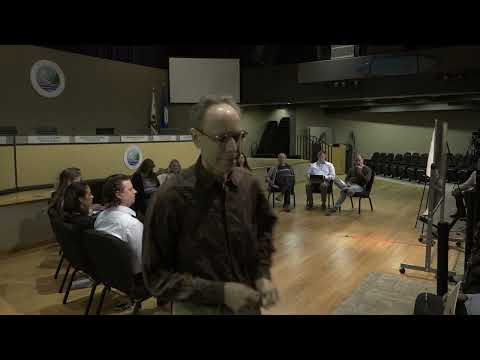
Jerry Cresciato, who facilitated the June 26, 2025 strategic‑planning workshop for the Malibu City Council, told council members the session should look forward from the city’s recent fire response and outline a multi‑year roadmap for rebuilding and resilience.
Jerry Cresciato, who facilitated the June 26, 2025 strategic‑planning workshop for the Malibu City Council, told council members the session should look forward from the city’s recent fire response and outline a multi‑year roadmap for rebuilding and resilience.
Nut graf: Council members and staff used a traditional SWOT (Strengths, Weaknesses, Opportunities, Threats) framework to surface priorities for Malibu’s recovery and long‑term planning. The group emphasized the need to move from reactive response to proactive planning while a brief window of state and federal funding is available.
Most important outcomes and concerns
- Staffing and workload: Council members and senior staff repeatedly described the organization as “understaffed and overcommitted.” Council member Steve said the city budget for 2024–25 included fuller staffing levels to address that gap, but participants warned that hiring alone will not solve retention without clearer priorities and project continuity.
- Infrastructure vulnerability: Public commenter Ryan Embry and several council members raised water‑system concerns. Embry noted an aging 30‑inch water main that fractured in 1999 and left the city without water for three days; he cited a 2014 estimate that replacing the water system could cost roughly $240–$250 million. Council members also raised aging electrical and road systems and challenged the city to prioritize long‑term infrastructure projects.
- Communications during disasters: Facilitator Jerry Cresciato and staff stressed the need for a resilient public notification system that works when commercial telecoms fail. Cresciato referenced options such as Alert FM or other radio‑based technologies and said, “We absolutely have to have a way to communicate with our public during disasters.” Council members described cell‑tower outages during recent fires and asked staff to prioritize emergency communication planning.
- Opportunities for funding and modernization: Staff and council members pointed to a near‑term opportunity to secure state and federal disaster and recovery funding. Candace (facilitator/consultant) and others described a “window of sympathy” for funding; participants also urged the city to accelerate digital transformation (online payments, permitting systems, asset management and a public project dashboard) to improve efficiency and transparency.
- Land‑use and identity tensions: Council members discussed long‑standing tension between preserving Malibu’s rural, low‑density character and economic or development pressures. Participants identified state housing‑element mandates and a recent CEQA change aimed at encouraging infill as policy pressures to monitor.
Decisions and next steps
No formal policy was adopted at the workshop. Participants agreed on process next steps: the city’s executive team and senior managers will meet to map the workshop results into a multiyear strategic plan and a prioritized project list that can be tracked publicly; facilitators recommended a follow‑up session to convert the SWOT findings into specific, time‑bound goals. Council members and staff discussed creating a public‑facing dashboard so residents can see progress on fire hardening, infrastructure projects and other priorities.
Representative quotations
“We want to stay big picture with the questions that we ask and not get in the weeds,” facilitator Jerry Cresciato told the council as he opened the SWOT exercise.
“It’s important for us as leaders to be able to view what’s in front of us and anticipate so that we are ready for 2050,” Cresciato said in describing long‑term objectives.
“We need a way to communicate with our public real time and even when the power’s out,” Cresciato said when council members discussed emergency communication systems.
Context and background
Council members described strengths including a resilient and engaged constituency, a shared sense of purpose among staff, and strong relationships with county and state officials. Weaknesses surfaced included recruitment and retention challenges driven by high housing and commute costs, jurisdictional confusion with overlapping agencies, reliance on aging systems and an often reactive posture to crises. Opportunities cited included federal and state recovery funding, potential land‑banking or open‑space strategies, and investments in technology and asset management; threats included possible statewide density mandates, changes to CEQA, reduced federal funding uncertainty and natural‑hazard exposure, including earthquakes and tsunamis.
Ending: Council and staff agreed to convert the workshop findings into a formal strategic planning document and to reconvene senior managers for a follow‑up meeting. Facilitators recommended that the executive team return recommended priorities and a draft multiyear plan for council review and public communication.