Get Full Government Meeting Transcripts, Videos, & Alerts Forever!
Get email alerts on the Education Lcap Local Indicators topic
No spam. Unsubscribe anytime.
Alisal Union presents local indicators, reports full implementation for facilities and materials; flags math and family engagement for improvement
Summary
Deputy Superintendent Monica Ansell told the board the district self-rated most local indicators at the top implementation level, reporting 0% misassignments, full access to standards-aligned materials and no facilities deficiencies; the district scored a 4 in mathematics implementation and cited family engagement as an area for continued work.
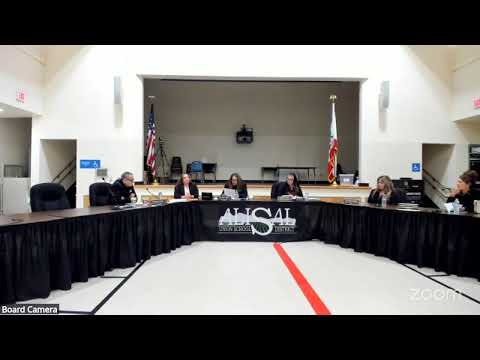
Deputy Superintendent Monica Ansell presented the Alisal Union School District’s locally reported indicators to the Board of Trustees, describing the state-required self-assessment the district will submit alongside its Local Control and Accountability Plan.
Ansell said the local indicators use a state-provided tool tied to LCFF priorities and state assessments such as SBAC and ELPAC, and that the district uses Williams inspections and the School Accountability Report Card (SARC) as evidence for several items. “This is a requirement from the state,” she said.
The district reported 0% misassignments for teachers, 0% of students without access to standards-aligned instructional materials, and 0 identified facilities deficiencies from the most recent Williams inspections. On the state self‑reflection scale for implementation of recently adopted academic standards (1 = exploration; 5 = full implementation), the district rated most content areas a 5 and rated mathematics a 4, noting the need for additional teacher and student supports in math.
On family engagement (Priority 3), Ansell said the district uses LCAP parent surveys and multiple site- and district-level engagement structures; she reported the district “is in full implementation and sustainability” overall but acknowledged the score reflected room for improvement. She referenced new and incoming staff positions — community school coordinators and parent education specialists — intended to strengthen outreach and trust with families.
Board members asked for clarification on how the measurements are verified and how the district prevents or responds to teacher misassignments. Ansell explained misassignments occur when a teacher lacks the credential or permit required for their classroom assignment and is not corrected; she described HR and credential tracking processes that prevent such cases from persisting.
A trustee suggested the district consider a targeted metric to increase bilingual education enrollment in future LCAP cycles; the speaker noted current bilingual enrollment at about 39.2% and urged staff to evaluate whether a percentage‑based goal could be added for 2026–27.
The district adopted the full LCAP later in the meeting (Item 7a).