Get Full Government Meeting Transcripts, Videos, & Alerts Forever!
Get email alerts on the Environmental Policy Carbon Capture topic
No spam. Unsubscribe anytime.
Marshall County Planning Commission directs staff to start ordinance process to consider ban on carbon capture storage
Summary
Commissioners voted to begin drafting an ordinance and start the public-process steps to potentially ban carbon capture and storage (CCS) in Marshall County, directing staff and the county attorney to prepare draft language and schedule hearings.
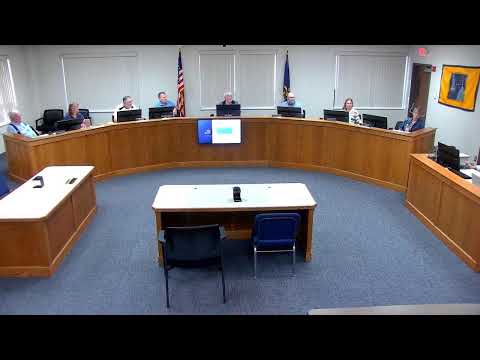
The Marshall County Planning Commission on June 26 voted to start the process of drafting an ordinance that would ban carbon capture and storage (referred to in the meeting as CCT/CCS) within the county, with commissioners and staff noting the action would begin ordinance drafting and public hearings rather than immediately enact a ban.
A commissioner told the body the county has a limited timeframe to act on its moratorium list and asked whether members were interested in starting a ban now; another commissioner summarized that a moratorium could be one year but that a commission could pursue a permanent ban by ordinance and later change it if desired. County staff said drafting the ordinance and conducting public hearings would require working with the county attorney.
During discussion one commissioner urged peers to research carbon capture and explained the technology in general terms: “Carbon capture is where they take... the carbon... and they liquefy it... and they put it under a high pressure and either truck it or run it through lines,” and that injected CO2 is often targeted to subsurface shale formations. That commissioner also voiced concern about potential contamination if a rupture occurred and said, “It scares me to death.”
A motion was made and seconded to start the ordinance development process; the motion passed on a roll-call vote with all commissioners present voting yes. Staff will draft ordinance language, consult the county attorney, and schedule the required public hearings before any legislative action would be taken.
Commissioners and staff emphasized the vote initiated a process rather than imposing an immediate prohibition; one commissioner noted that any ban could be challenged in court and that lifting a ban later would require the formal ordinance process and a recommendation from the planning commission.