Get Full Government Meeting Transcripts, Videos, & Alerts Forever!
Get email alerts on the Zoning topic
No spam. Unsubscribe anytime.
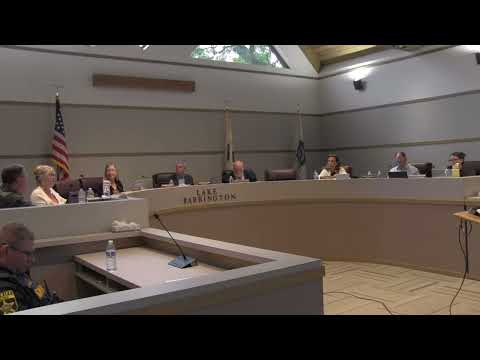
Trustees hear rezoning, business proposal for 2231 North Pepper Road
Summary
Lake Barrington trustees heard a petition Tuesday to rezone two parcels at 2231 North Pepper Road from R-5 residential to B business and received a presentation from the prospective operator about building a beekeeping and retail facility on the site.
Lake Barrington trustees heard a petition Tuesday to rezone two parcels at 2231 North Pepper Road from R-5 residential to B business and received a presentation from the prospective operator about building a beekeeping and retail facility on the site.
The rezoning matter matters to neighbors and the village because the applicant said the site will transition from residential to commercial use and because the property contains wetlands and an unclear chain of title on a narrow Parcel 2. The board heard legal and site‑planning details but took no formal vote in the portion of the transcript provided.
“My name is Matt Lsuzsa. I represent Mr. Thompson, Honeywelling Bee Company as well as the purchasing entity, which is Cover Road Realty Company,” Matt Lsuzsa told the board while introducing the purchaser and the rezoning request. Lsuzsa said Parcel 1 is about 5.06 acres and that Parcel 2 is a six‑foot strip of land that runs north‑south between the village‑owned property and the purchaser’s parcel.
An owner/applicant representing the Honeywelling Bee Company said the business operates roughly 200 hives scattered near and north of Lake Barrington and presented architectural renderings for a proposed building. The applicant said three of the five acres on the site are wetlands and therefore not buildable, and that water and sewer connections are still being evaluated.
President Berg introduced the item as a courtesy review and told the applicant, “this is an opportunity for you to come to the board just to explain to everybody ... There’s no binding action,” language the village used to indicate that the hearing was for discussion and feedback, not a final construction approval.
Speakers and trustees asked planning and permitting questions. A trustee asked whether the applicant had confirmed that the buildable area, setbacks and permitting requirements would allow the proposed footprint; the applicant replied that they had researched the requirements and were “pretty confident” the site accommodates the design. Board members emphasized that a wetland delineation will be required and that use approval is separate from construction permitting. As one trustee summarized, “Part of that process ... is the use approval. And the next step is the approval of the construction.”
Lsuzsa told the board the purchaser closed escrow the morning of the meeting and that the deed for Parcel 1 came from Chicago Title and Trust “as successor to Columbia National” (per the transcript). He said Parcel 2’s ownership traces back to an earlier conveyance involving a Sokolus family member; the applicant said the parcel is included in the village’s ordinance and in the rezoning application but that title questions remain to be resolved.
No formal motion or final vote on the rezoning is recorded in the provided transcript. Trustees and staff noted next steps for the applicant: obtain a wetland delineation, resolve any title/parcel‑line issues on Parcel 2, and pursue construction permits after any zoning or use approvals. The applicant said they will return with additional materials and engineering documentation as required.
The exchange on Pepper Road was part of a broader land‑use agenda item that included notices of prior planning commission review and related procedural steps; the transcript indicates the applicant previously presented before the planning commission and that notices were posted and mailed to interested owners.
If the board proceeds later with an ordinance or formal vote, that action and any conditions will be reflected in subsequent minutes and ordinances.