Get Full Government Meeting Transcripts, Videos, & Alerts Forever!
Get email alerts on the Code Enforcement Penalties topic
No spam. Unsubscribe anytime.
Planning commission recommends approval of revised code-enforcement penalties, appeals and warrant language
Summary
The commission voted unanimously June 26 to recommend a text amendment that clarifies remedies and enforcement steps, adds tiered civil fines, standardizes appeal timing and adds a right-to-inspect/warrant provision referencing Utah rule 40(k).
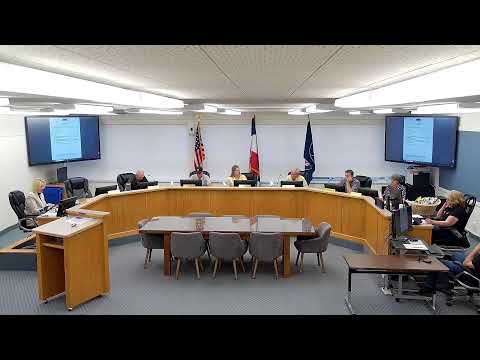
The Morgan County Planning Commission on June 26 voted unanimously to recommend approval of a revised code-enforcement penalty section that clarifies enforcement steps, expands available remedies and adds explicit right-to-inspect and administrative-warrant language.
Janet, planning staff, summarized the draft changes as a rewrite of the county's penalty section to make enforcement clearer and legally defensible. She said the update lists remedies, establishes a step-by-step enforcement process, and sets uniform appeal timing. "The big thing was making sure that we had a good list of remedies available to us," Janet said. She proposed language tightening emergency abatement to "take only those actions that are reasonably necessary and narrowly tailored to eliminate the immediate threat," and to require written notice and an itemized statement of costs following any emergency action.
The draft raises the potential civil fine from the county's previous maximum (historically up to $100) to a framework allowing higher fines; staff suggested a tiered structure (for discussion) such as $500 for a first offense, $750 for a second and $1,000 for a third offense within 12 months. The proposal delays civil fines until after a 30-day notice-to-comply period and preserves avenues for extensions and appeals to a hearings officer. "Under how I structured this, you're not gonna get charged that civil fine until after the 30 days you've had that 30 days notice to comply," Janet said.
Staff also proposed explicit authority for enforcement officers to seek administrative warrants under Utah Rules of Criminal Procedure Rule 40(k) when probable cause exists and entry is denied; such warrants must be reviewed by a prosecuting attorney and executed by law enforcement. Chris, a staff member involved in enforcement, told the commission that warrant authority would be used for the "worst of the worst" properties and coordinated with the sheriff's office.
Public commenters raised case-specific concerns. Lucas Grama described an active code-enforcement matter involving building setbacks and asked where to take complaints; staff advised that code enforcement is handling the active case and suggested affected neighbors contact the county code-enforcement officer. Resident Tina Kelly asked whether the provision would override no-trespassing signs; staff replied that the warrant process is limited, requires judicial approval and would be used only in severe cases.
After discussion about appeals, flood of technical clarifications, and consistency of calendar-day language in the draft, Member McMillan moved to recommend approval of the draft with the staff conditions outlined in the memorandum dated June 26, 2025, including leaving specific small-subdivision appeals with the county commission, adopting the tiered fine approach, and adding search-warrant language. Member Wilson seconded the motion; the commission voted unanimously to recommend approval. The planning commission's recommendation will be forwarded to the county commission for final action.