Get Full Government Meeting Transcripts, Videos, & Alerts Forever!
Get email alerts on the Geohazards Slope Policy topic
No spam. Unsubscribe anytime.
Planning commission holds public hearing on removing 25% slope ban from geohazards code
Summary
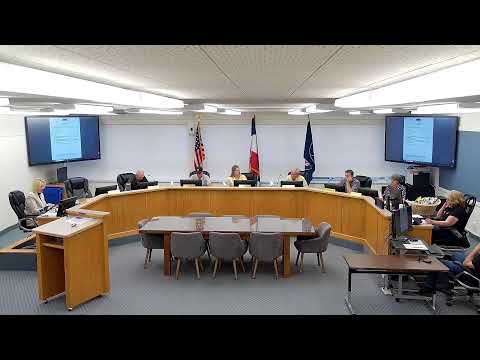
At its June 26 meeting the Morgan County Planning Commission held a public hearing on a proposed text amendment that would remove a 25% build-prohibition from the county geohazards code, require geohazard reviews for slopes of 15% or greater, and place liability on licensed geologists and geotechnical engineers.
Morgan County Planning Commission members held a public hearing June 26 on a draft text amendment to the county geohazards code that would remove the longstanding 25% slope prohibition and require geohazard reports for properties with slopes of 15% or greater.
Planning staff explained the change was proposed after conversations among property owners, the county attorney, the county geologist and the county engineer about the legal risk of an arbitrary threshold. "The goal of this text amendment is to provide an opportunity for property owners who have developable lots to pursue that development, and place the liability not on the county, but on the professionals that have the licenses," Josh, planning staff, said during the meeting.
Mark Miller, county engineer, told the commission that steep slopes can often be mitigated if property owners are willing to pay for professional design and that other jurisdictions use different numeric thresholds. "If people are willing to spend the money, they can mitigate the hazards of building on a steep slope," Miller said. "I've seen throughout the years how there's always ways based on the geologist recommendations and then the geotechnical engineers' designs where they can mitigate potential hazards and where they can actually build safely in some of these hazardous locations." Miller added that some areas—such as Norwood Tuff deposits—may remain infeasible to build on despite mitigation.
Several commissioners asked where the 25% figure originated and whether raising or removing the percentage would meaningfully change the county's inventory of developable land. Staff said the 15% trigger for geohazard studies predates the current draft and is based on compilations of landslide occurrences; "most landslides occur on slopes that are steeper than 15%, particularly in Morgan County where you have that Norwood formation," a county geologist told the commission when staff presented background materials.
Members of the public told the commission they were concerned about safety, hillside scarring and precedent. Tina Kelly, a Mountain Green resident, said a house in her neighborhood was lost to a landslide despite professional advice in the past and warned the change could open more slopes to development. "That house is gone, and the county had to deal with the consequences of that for many years," Kelly said. Other public commenters urged the county to consider a separate ridgeline or hillside protection ordinance to address visual and access impacts such as switchback driveways.
The commission conducted the public hearing but did not adopt the text amendment at the meeting. Commissioners discussed recommending the change originate with the county commission or be re-noticed with clearer public notice; one commissioner suggested the planning commission would be more comfortable if the county commission initiated the amendment. The chair said the item will return only if the county commission chooses to bring it forward or staff re-notices the amendment with clarified language.
The record shows extended technical discussion of mitigation, the proposed shift of liability to licensed geologists and geotechnical engineers, and concern from residents about past landslides and visual impacts. No ordinance was adopted by the planning commission on June 26; next steps depend on whether the county commission directs staff to proceed or if staff re-notices the amendment for another planning commission hearing.