Get Full Government Meeting Transcripts, Videos, & Alerts Forever!
Get email alerts on the Education Student Recognition topic
No spam. Unsubscribe anytime.
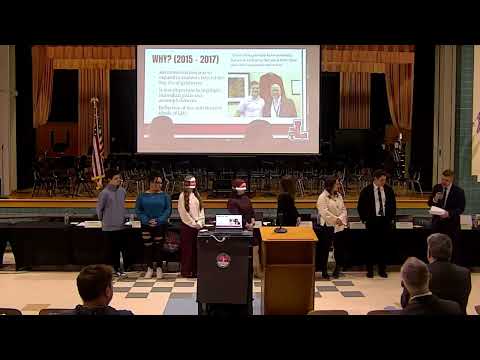
Lancaster students, alumni present decade-long plan to adopt laude recognition at Lancaster High School
Summary
Student leaders and alumni told the Lancaster Central School District Board of Education about a laude (summa/magna/___ laude) recognition system, including point values for AP, dual-enrollment and mastery courses, proposed GPA thresholds, and next steps for implementation.
Student leaders and alumni presented a decade-long plan to implement a laude recognition system at Lancaster High School during a Lancaster Central School District Board of Education meeting. The presenters said the program, developed beginning in 2015, would recognize graduates in three tiers (___ laude, magna laude and summa laude) based on a combination of cumulative GPA and earned "quality points."
Why it matters: presenters said the system is intended to broaden academic recognition beyond a single valedictorian and to align high-school recognition with college-style honors, while remaining transparent about how students earn recognition. The proposal would affect graduation recognitions, cords, and speech selection and is intended to apply to multiple academic pathways used at Lancaster High School.
Student presenters, current and former Lancaster High School student-leaders, described how points would be earned and how the system will be implemented. The presenters said AP courses would earn 2 quality points each, dual-enrollment courses would earn 1 point each, and courses of mastery (including academy classes, art or music, and Harkness-style offerings) would earn 0.5 points. They said a student must have a 90% cumulative GPA to be entered into the running for any laude recognition. The thresholds mentioned were: 7 quality points to reach the bottom tier (___ laude), 10 points for the middle tier (magna laude), and 15 points for the top tier (summa laude). Presenters said the top tier would likely recognize about 30% of a graduating class.
Presenters described implementation steps: the creation of a faculty advisory council to advise Mr. Candela on implementation details (presenters said Mr. Candela will create that council), coordination with guidance on how the laude system would appear on transcripts and in the district's e-school records, and outreach to younger grades (including an eighth-grade information night) so families and students understand the new recognition pathways. Presenters noted questions remain about graduation logistics if the district eliminates a valedictorian and salutatorian (for example, how speaking roles and recognition cords will be assigned).
The students and alumni repeatedly framed the project as a student-led, multi-year legacy effort. Presenters traced the project to work begun in 2015 and said the plan represents sustained leadership passed from class to class. District leaders on the dais praised the students’ work and described the proposal as consistent with Lancaster’s emphasis on AP, dual enrollment and academy offerings that allow personalized student pathways.
Next steps attendees described: convening a faculty advisory council to finalize technical implementation details, planning administrative adjustments for graduation ceremonies (cord colors, speakers), and continuing outreach through curriculum committees and informational events for younger students. No formal board vote on adopting the laude recognition system was recorded in the meeting transcript.