
University of Delaware Briefs Milford Planning Commission on SB 237 Climate-Resiliency Requirement for Next Comp Plan
Get AI-powered insights, summaries, and transcripts
Subscribe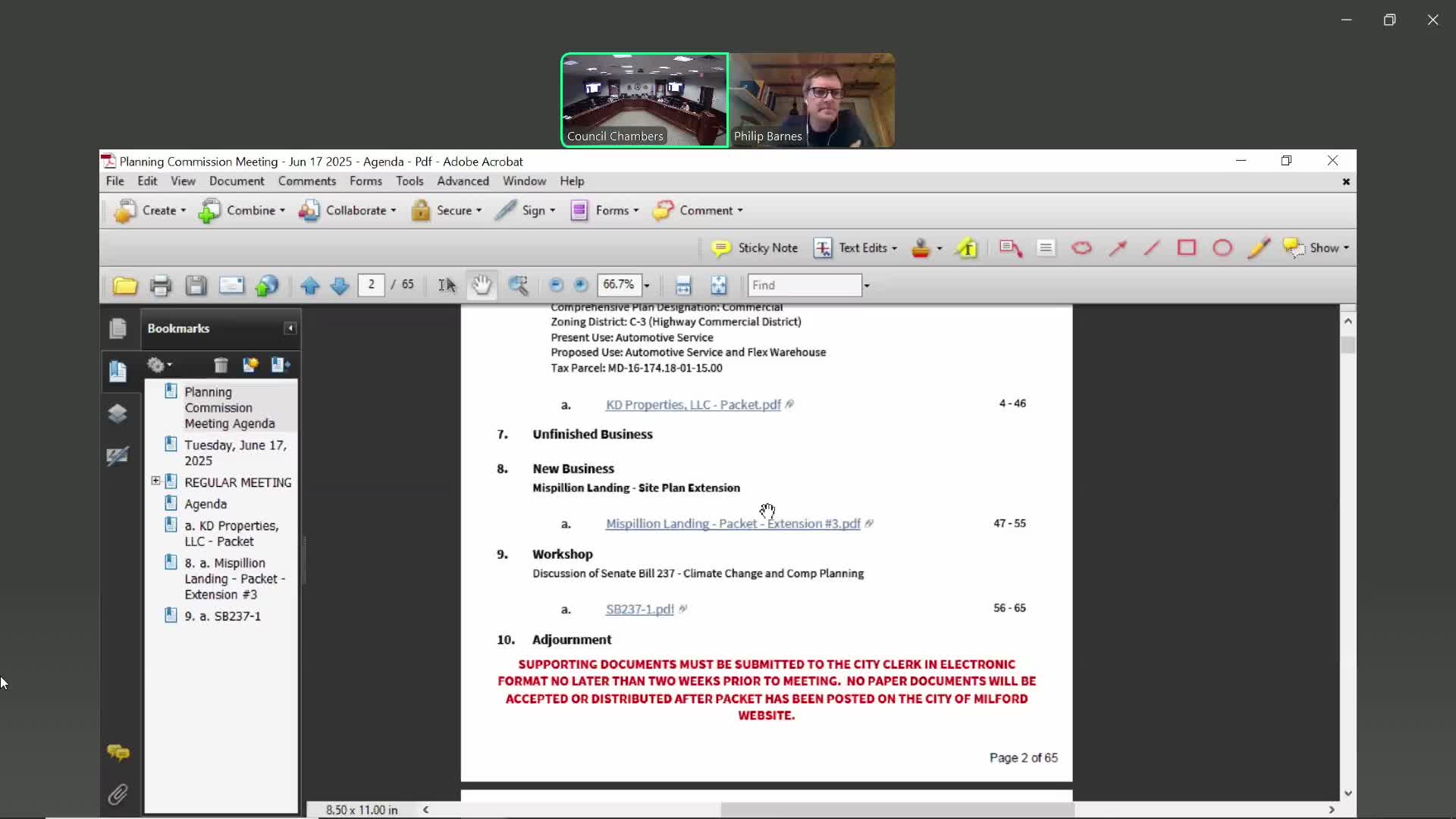
Summary
Philip Barnes of the University of Delaware told the Milford Planning Commission that Senate Bill 237 requires municipalities to incorporate climate change and resiliency into their next comprehensive development plans, effective Nov. 15, 2026, and solicited commission feedback before state guidelines are written.
Philip Barnes of the University of Delaware told the Milford Planning Commission that Senate Bill 237 requires the city to include climate change and resiliency in its next comprehensive development plan and that state guidance is expected later this year.
Barnes, who helped Milford produce its 2018 comprehensive plan, said the bill takes effect Nov. 15, 2026, and that the portion of the law directing municipalities to incorporate climate change and resiliency will apply to Milford’s next plan update. “Climate change and resiliency are now needed to be incorporated into your comprehensive development plan,” Barnes said, and he asked commissioners for feedback to pass to the Office of State Planning Coordination and DNREC as they develop implementing guidelines.
Barnes explained that county provisions in the bill are more detailed than the municipal language and that the state will likely ask for strategies to address flooding, sea-level rise and heat. He noted Milford already included a heat vulnerability analysis and flood mapping in the 2018 plan and suggested the city is in a relatively strong position because of that prior work.
Commission members offered feedback. One commissioner asked the state to review existing local plans and coordinate with cities and developers, noting Milford already includes trails, flood mitigation measures and other resilience elements. Commissioners raised cooling centers, reflective roofing and energy-efficiency approaches as potential components of a municipal resilience strategy.
Barnes said he is meeting with communities statewide to collect questions and concerns to help shape state guidance. He invited additional input by email through city staff and said he would compile feedback for the state agencies. No formal action was taken; the session served as a workshop and information-gathering opportunity.
The bill’s municipal language references incorporation of climate change and resiliency alongside standard comp-plan chapters such as housing and transportation; Barnes said the Office of State Planning Coordination will produce guidelines to define expectations for municipalities.