Get Full Government Meeting Transcripts, Videos, & Alerts Forever!
Get email alerts on the Liquor License Super1 topic
No spam. Unsubscribe anytime.
Council declines to approve Super 1 Liquor license after contested public hearing
Summary
The council did not approve a Class B liquor and beer license application for Super 1 Liquor LLC at 2202 E. Second St.; the motion to grant the license failed after public testimony alleging a "gentleman's agreement" and councilors citing promises and neighborhood impacts.
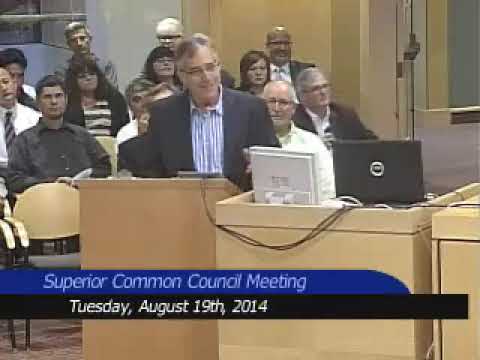
The City of Superior Common Council on Aug. 19 considered and ultimately did not approve a Class B liquor and beer license application for Super 1 Liquor LLC at 2202 E. Second Street after an extended public hearing and council debate.
The license matter had been referred to the council after the License and Fees Committee recommended approval. Counselors voted on the application after more than an hour of public comment and legal argument. The council announced the final tally as "5 to 3" and the mayor said, "the motion to approve fails." Several council members explained their votes on record.
Opponents of the license, including nearby business owners and their attorneys, argued that Super 1 had given neighborhood stakeholders and merchants a verbal assurance during negotiations that it would not operate a liquor store at the site. Walter Hagen, an East End business owner, said he agreed to a land swap with Super 1 based on what he said were assurances that there would be no liquor store at the development: "I never would have traded the land ... I was given the impression and told that ... there wasn't gonna be any bar or liquor store there," Hagen said.
Attorney Steve Ledeen, representing existing liquor-store owners Jim and Carol Bolen, urged the council to deny the license on the basis of local discretion and precedent. Ledeen cited an older Wisconsin court case upholding a council's refusal to grant a license to protect existing neighborhood businesses, saying that municipalities have discretion to refuse licenses even where applicants meet statutory qualifications.
Supporters of Super 1, including attorney Toby Markovich and representatives for Miner's/SuperOne, said the company had not promised to forgo a liquor license and that large retailers should be treated the same as other applicants. Markovich argued that the company had preserved the option to operate a liquor store during earlier discussions and asked the council to apply the "golden rule" and treat Super 1 fairly.
City officials and the city attorney discussed legal standards for deciding liquor-license applications. City Clerk Terry Callan noted that if the council denies a license it must provide the applicant a written statement of reasons under state law; City Attorney Froelich ("Frog") Prell and others advised councilors to articulate non-arbitrary, non-capricious reasons if they intended to deny the application.
Council members split on the question. Councilor Mazzolia said "I vote no" and cited concerns about oversaturating the market and doubts about Super 1's candor with neighborhood merchants. Councilor Olsen also voted no and said she was not satisfied with Super 1's explanations and that promises made to neighborhood constituents had not been honored. Other councilors including Councilor Fennessy and Councilor Sweeney voted to approve, with Committee members urging deference to the license-and-fees process.
Mayor Bruce Hagen urged transparency in the vote and asked councilors who voted no to state their reasons so the clerk could include them in the statutory denial letter. He emphasized that the city is obligated to document reasons for denial when a license is refused.
The mayor later returned to other agenda business; there was no further council action on the Super 1 application at that meeting. The applicant may pursue further administrative or legal options available under state law; the transcript records council procedures and comments but does not record any subsequent filings or appeals.