Get Full Government Meeting Transcripts, Videos, & Alerts Forever!
Get email alerts on the Parks And Recreation topic
No spam. Unsubscribe anytime.
Milford council approves preliminary plan and funding path for Deep Branch Park after months of debate
Summary
After public comment both for and against, Milford City Council approved a preliminary site plan and Phase 1 funding strategy for the Deep Branch Park project, authorizing staff to continue agency approvals and competitive bidding for construction.
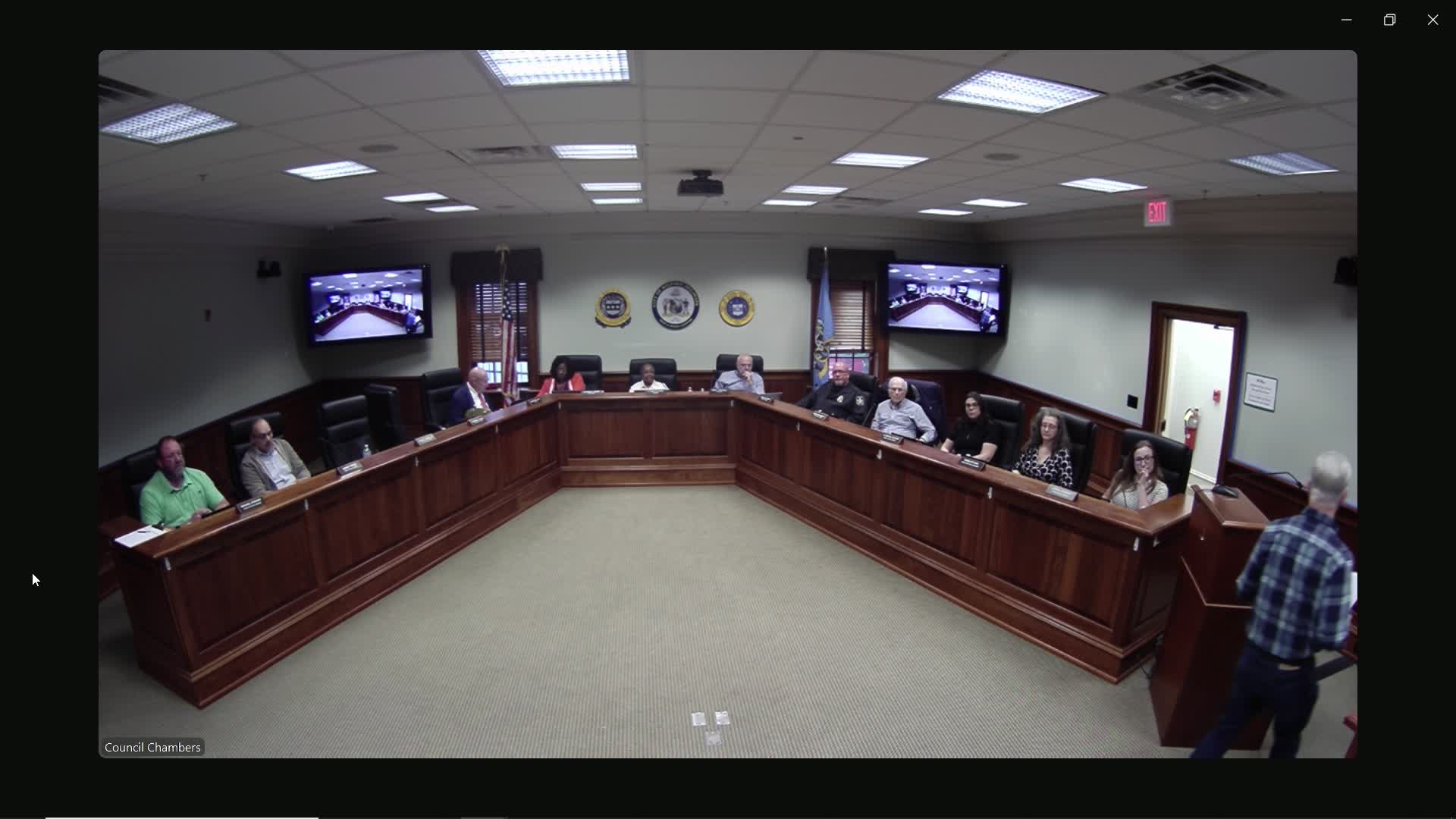
Milford City Council on a 5-3 vote approved a preliminary site plan for the Deep Branch Park project and authorized staff to pursue required permits and competitive bids for Phase 1 construction.
The council vote came after a 15-minute public comment period in which multiple Milford residents urged the city to build the park and others raised concerns about traffic, noise and maintenance. Residents who spoke in favor described the park as a needed recreational resource for a growing portion of the city; opponents and some council members questioned the site choice, ongoing maintenance costs and whether grant funding might be better used elsewhere.
“Deep Branch Park, a project that holds the potential to greatly benefit our community both now and for generations to come,” said Nina Pletcher, who gave her home address as 428 South Walnut Street, during public comments. Several other residents — including Mitch Edmonson, Paul Hayes, Kathy Stetson and Carolyn Hayes — voiced support for creating more open space and recreational opportunities in the area.
Parks and Recreation Director Brad Denning told the council that the project has grant funding already in hand and that staff had split the work into phases. “The first phase is approximately $1,500,000,” Denning said, and he recommended proceeding with Phase 1 while pursuing reimbursements from state grants.
Finance Director Lou Vitola explained how the city would cover its matching portion without requiring new general-fund reserve allocations in fiscal 2026: moving two previously approved general-fund reserve projects (downtown restrooms and Marshall Pond) into the capital plan and applying $140,000 from projected realty transfer taxes. Vitola said that nearly $964,000 in grant funding remains available and that the city would need roughly $567,000 in matching money to complete Phase 1.
City Solicitor Rhett Rutt summarized the grant contract language at the council’s earlier workshop and said his reading was that, if state or federal appropriations were later insufficient, the grant agreement could be treated as terminated but that funds already disbursed typically could not be clawed back. Rutt’s memo, which staff included in the council packet, is the basis for the city’s legal analysis of the grant terms.
Council members who voted for the motion cited the secured grant funding and the limited new city money required immediately. Members opposing the motion raised concerns about park location (outside much of the built area and, in their view, difficult to monitor), potential maintenance costs and whether other neighborhoods without parks were higher priorities. Several council members asked staff to take extra steps to protect neighbors from noise and light impacts in final designs.
The motion approved by council authorized the mayor to proceed with the preliminary site plan, continue solicitation of agency approvals (including final approval from Sussex County Planning & Zoning), and competitively bid Phase 1 construction. The motion’s text in the record included a Phase 1 construction cost estimate (including contingencies) of $1,540,000, to be funded by anticipated grant awards (including Outdoor Recreation and Parks & Trails program, Community Reinvestment funds and Community Transportation funds) and by $576,177 in local funds identified as $436,177 transferred from prior general-fund reserve allocations and $140,000 from fiscal-year-2026 realty transfer taxes.
The council made clear that additional phases would require future council approval and appropriation. Denning and staff said subsequent phases would likely be considered in fiscal 2027–28 pending further grant awards and budget decisions.
The council’s preliminary approval does not remove requirements for state or county agency signoffs or for final design changes that respond to neighbor concerns; staff will return to council with updates as those approvals and the competitive-bid process proceed.