Get Full Government Meeting Transcripts, Videos, & Alerts Forever!
Get email alerts on the Investment Performance topic
No spam. Unsubscribe anytime.
Marquette Associates: SORP posts modest Q1 gain as markets rebound
Summary
Investment consultant Marquette Associates told the St. Mary's County Sheriff's Office Retirement Plan board that the fund returned 0.3% in the quarter, helped by non-U.S. equities and bond gains; private markets remain mixed. The board reviewed the report during its June 26 meeting and later voted to accept it.
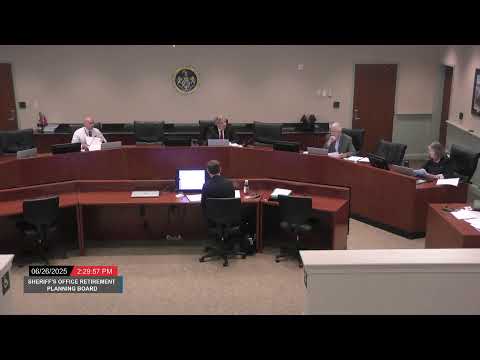
Marquette Associates presented the retirement plan's first-quarter investment review during the St. Mary's County Sheriff's Office Retirement Plan meeting on June 26, 2025. The consultant reported a 0.3% return for the quarter and described a mixed market backdrop: U.S. GDP contracted in Q1 while non-U.S. equities and several fixed-income segments posted gains.
The presentation underscored why the report matters to plan participants and county officials: it framed short-term performance within ongoing strategic changes — notably manager changes in private credit and a rebalancing proposal later approved by the board.
Mr. Wing, the Marquette Associates presenter, opened the presentation by noting recent macroeconomic volatility and its influence on returns. "In the first quarter, the U.S. economy did contract, with real GDP declining at an annualized pace of negative point 5%," he said, adding that some first-quarter distortions (notably front‑running of tariff announcements) made interpreting early GDP estimates difficult. He told the board that real-time data for the current quarter looked stronger and that the Federal Reserve was in a “catch‑22” balancing inflation and employment trends.
On the fund's results, Marquette reported the plan's market value at the end of March was about $159 million and that markets had risen since then. The consultant said the portfolio's diversification helped it post the modest positive return; non‑U.S. equities and U.S. bonds were among the better-performing asset classes. Private market valuations remained dated to December for some holdings and continued to be reported on a lagged basis.
Marquette flagged specific private-market developments: private equity and real estate legacy holdings have been declining as those vintages wind down; private credit activity (led by newly added managers) has produced steady, modest gains. On private credit specifically, the consultant reported a characteristic return near 7.3% for the private debt composite; private equity IRRs were reported around 12.5% in the materials. Marquette also said that certain hedge-fund allocations (Millennium) underperformed in Q1 but had rebounded in Q2.
Board members asked questions about ETF-like vehicles providing private‑market exposure, and Mr. Wing cautioned about liquidity mismatches and fee structures; he said some newer vehicles trade daily but hold assets that are not traded daily, which can create valuation and transaction-cost issues.
The board reviewed the written performance materials and later voted to accept the report as presented (see "Votes at a glance").
The consultant left the board with several monitoring items: continued pace of private-credit capital calls, the effect of manager upgrades on fees and liquidity, and near-term macro data that will shape Fed policy and market returns.