Get Full Government Meeting Transcripts, Videos, & Alerts Forever!
Get email alerts on the Juvenile Recovery Court topic
No spam. Unsubscribe anytime.
Youth services presents plan to reinstate Coffee County juvenile recovery court
Summary
Coffee County Youth Services presented a proposal to reinstate a juvenile recovery court focused on substance use and mental health for ages roughly 14–18; the committee expressed support and agreed to consider future funding at the August follow-up meeting.
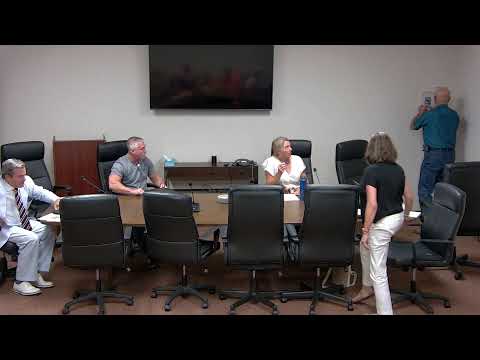
Coffee County Youth Services presented a proposal June 25 to reinstate a juvenile recovery court aimed at reducing youth substance use, improving family communication and lowering recidivism.
Dylan Haynes, a youth-services staff member, told the Opioid Abatement Committee that the program’s mission is “to improve public safety and the quality of life by reducing youth alcohol, substance use, and mental health challenges” through a strengths-based, four-phase model that includes judicial supervision, family support and community engagement. “We want to offer hope for these youth,” Haynes said during a data-driven presentation that drew on the court’s referral database.
Why it matters: Committee members said juvenile recovery court would be a preventive effort that addresses youth substance use before cases escalate and could be an appropriate use of opioid-abatement funds if rules and eligibility allow.
Key details from the presentation and discussion - Target population and metrics: Haynes said referral data (January of the prior year through June of the current year) shows the largest referral counts in the 14–17 age range; numbers Haynes cited in the presentation included counts he read aloud by age group (14: 88; 15: 95; 16: 120; 17: 129; 18: 1). He proposed tracking outcomes by graduation/completion rates and reductions in positive drug screens.
- Program design: Haynes described a four-phase model used previously in the county and recommended family-involved services, intensive court supervision and evidence-based curricula (for example, MRT). He emphasized collecting quantitative data (referrals, completions, recidivism) to measure impact.
- Coordination and support: Judge Perry — referenced by committee members and signaled as supportive — and county probation staff discussed logistics. Committee members and probation staff said juvenile cases are typically referred for alcohol/drug assessments on first offense and that community providers such as Solutions and Centerstone handle many assessments. Haynes and others discussed training or certifying local staff to perform assessments to speed service delivery.
- Community partners: Trish Mona (Lammie Learns) presented an early-childhood prevention/intervention curriculum for ages 3–12 and left materials; committee members suggested the organization could be eligible for community-level funding streams.
Committee reaction and next steps Committee members called the juvenile recovery court proposal “worthwhile” and agreed it should be considered as a possible future use of opioid-abatement funds. Members asked staff to identify the court rules and eligibility criteria that would govern juvenile recovery-court participation and to return with a clearer plan and cost estimate at the committee’s next meeting. The committee set a follow-up meeting for Aug. 20.
Ending Officials thanked Haynes and community presenters and asked the youth-services team to provide supplemental materials and a budget estimate so the committee can evaluate a possible funding request at the August meeting.