Get Full Government Meeting Transcripts, Videos, & Alerts Forever!
Get email alerts on the Opioid Abatement Funds topic
No spam. Unsubscribe anytime.
Coffee County oversight committee hears status updates from opioid-abatement fund recipients
Summary
At a June 25 Coffee County Opioid Abatement Committee meeting, funded programs reported on hires, events and early outputs from opioid-settlement disbursements; committee asked recipients for memos documenting use and agreed to reconvene in August.
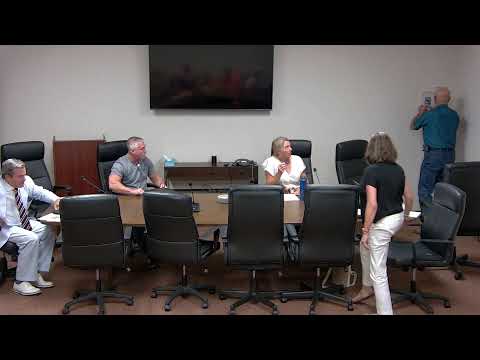
The Coffee County Opioid Abatement Committee met June 25 to review how recipients have spent opioid-settlement funds the committee authorized earlier this year, and to confirm follow-up reporting requirements.
Committee chair Dennis Hunt said the group’s role is oversight of settlement dollars distributed to local programs by the state and county. “We are charged with oversight on how the money is spent,” Hunt told attendees, adding that recipients should provide memos explaining how funds were used for the committee record.
Why it matters: Coffee County received settlement money from national and state actions against drug manufacturers; the committee is responsible for tracking local disbursements and ensuring they align with approved uses.
What recipients reported - Public Defender’s Office: A representative for the office said a full-time social worker was hired using the funds. The representative reported 98 referrals, 45 treatment placements and 160 assessments between the social worker’s April 15 start and the day of the June 25 meeting; the representative said he would circulate a written summary with exact numbers for the committee. (Reported by the public defender’s office representative.)
- Chase Way Fentanyl: Program representative Bickers described a “NewStart” program that engages people on probation as event volunteers and trains them to distribute naloxone. He said the program has built a web portal to track participation and expects to begin the new phase of the program in July.
- Coffee County Collaborative Coalition: Coalition representative Alan said the coalition has not yet received funds but is working with county accounting (staff member Mariana) to provide a tax ID and other paperwork. He said the coalition is preparing to hire an assistant for recovery-court work and coordinating with county staff to establish a separate budget line so money coming through the county can be disbursed.
- Recovery-is-the-New-High (recovery programming): Representatives said they accelerated planning after receiving notice of additional months of funding and have collaborated with the coalition on youth outreach events, including planned swim days and youth activities in Manchester and Tullahoma to draw parents and children into prevention programming.
Funding amounts discussed Committee members reviewed the disbursement schedule they approved earlier this year. Those figures — as stated at the meeting — included the following allocations (initial disbursement and a stated follow-on amount): Coffee County Collaborative Coalition — $33,375 (initial) and $160,000 (follow-on); Public Defender’s Office — $2,223,006.52 (initial) and $136,004.64 (follow-on); Chase Way Fentanyl — $14,007.54 (initial) and $70,008.22 (follow-on); Recovery programming — initial amount cited at the meeting and a stated follow-on figure (figures reported in the meeting transcript as given). Committee members and recipients repeatedly referred to an April 15 start date for the initial round and July 1 for the follow-on fiscal year disbursements.
Access and bookkeeping questions Recipients raised administrative issues. Coalition and other recipients said county accounting staff asked for tax IDs and paperwork before issuing county-processed funds; committee members advised preparing an invoice that matches the county/state paperwork if requested. Committee members asked recipients to prepare brief memos documenting expenditures and program outputs so the committee’s records will reflect how funds were used.
Next steps Committee members agreed to keep monitoring use of the funds and requested written memos from each recipient explaining how the money was spent and what remains to be done. The committee set a follow-up meeting for August 20 to continue oversight and to consider future disbursement requests.
Ending Committee chair Dennis Hunt thanked recipients and the public for attending and said the committee will help recipients “as long as you do what you need to do.”