
Bridgewater-Raynham school committee debates post-election budget, faces July 1 DESE deadline
Get AI-powered insights, summaries, and transcripts
Subscribe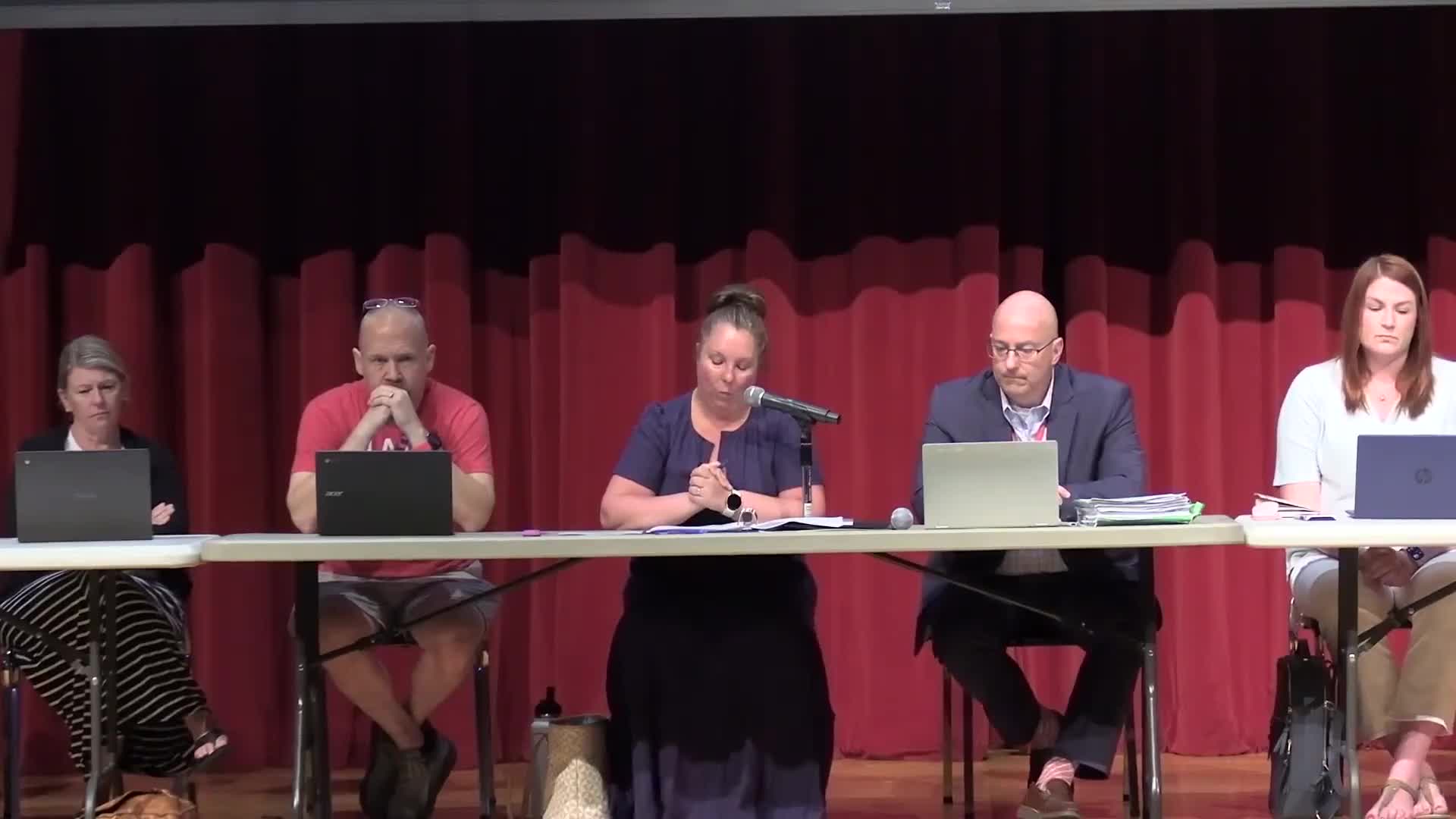
Summary
Bridgewater-Raynham Regional School District officials debated budget options Tuesday after voter overrides failed in both member towns, with the committee under a July 1 deadline to submit an amended or recertified budget to the Massachusetts Department of Elementary and Secondary Education (DESE).
Bridgewater-Raynham Regional School District officials debated budget options Tuesday after voter overrides failed in both member towns, with the committee under a July 1 deadline to submit an amended or recertified budget to the Massachusetts Department of Elementary and Secondary Education (DESE).
The failed overrides prompted discussion of three main paths: amend and resubmit a reduced “post-election” budget to the towns, accept the smaller town-approved increases (3 percent for Raynham and 4.67 percent for Bridgewater), or allow DESE to impose a 1/12 budget that would apportion funding monthly and likely be smaller than the committee’s proposed spending.
The committee’s chair and staff told members the district has 15 days of extension from DESE to act and that, absent a certified budget by July 1, DESE ‘‘will step in’’ and implement a 1/12 budget for fiscal 2026 that would be allocated monthly to the district and assessed to the towns. The committee also discussed using district stabilization (E and D) funds to reduce the towns’ assessments and to lower the shortfall the district faces.
Superintendent Powers summarized the political and turnout context during the meeting and warned that only a portion of residents voted on the overrides: "only a portion of the communities voted. A very small amount, maybe 30% of each community voted," he said, noting the vote results mean the district must now rework its plan to match the towns’ decisions or pursue other statutory options.
Committee members and staff walked through budget math during the meeting. Staff presented scenarios that include keeping the committee’s previously approved top-line budget (about $97 million), or increasing the total budget to roughly $98 million and offsetting the increase with an additional draw from E and D so town assessments would not change. Members debated whether to add $800,000 from E and D to reduce a stated shortfall (discussed in the meeting as a roughly $4.8 million gap under some scenarios) and whether that additional draw would change the towns’ per-pupil assessments under the statutory method used to allocate costs between Bridgewater and Raynham.
The committee discussed timing and the procedural steps if towns disapprove an amended budget: if an amended budget submitted after the failed override is disapproved, statute requires the district to move to a joint town meeting (publishing a warrant in both towns, securing moderators and venue, and submitting a budget article for voters). Staff said the towns would have 45 days to approve or disapprove any amended budget the committee sends after certifying it.
Public commenters and members flagged program and staffing impacts if the district scales back. A parent and resident, Ashley Nettler, told the committee, "I implore you, stay strong. This is what is right," describing concerns about growing class sizes, special-education caseloads and the effect of 96 positions that had been given layoff notices. Committee members repeatedly noted that some short-term savings have already been identified but cautioned that relying on one-time savings or E and D draws is not a sustainable long-term solution.
Committee discussion also covered state revenue inputs (the FY26 “cherry sheet” and Chapter 70/Chapter 71 receipts), how the statutory assessment formula allocates minimum required town contributions and per-pupil shares, and the limits on the district’s ability to compel towns how to fund any approved budget. Members and staff encouraged immediate outreach to town managers and finance committees to explore whether towns could shift free cash or other sources to support a post-election budget, while several members cautioned that many town officials had expressed reservations about large overrides.
No final, recorded committee vote on a revised budget is shown in the provided transcript. A motion to recess until the following day was offered during debate so members could reconvene with additional information; the transcript does not show a completed vote on either the post-election option or a specific E and D appropriation. Staff and the superintendent said they would present detailed options and numbers for members to consider before any formal certification to DESE.
The committee faces an immediate procedural deadline: approve and certify a budget before July 1 to avoid DESE imposing a 1/12 budget for fiscal 2026, or submit an amended budget to the towns and await their decision under the statutory timeline.
Looking ahead, committee members said they will continue working with town leaders, review recurring revenue options, and weigh how much of the district’s stabilization funds to use now versus preserving for future years if another override effort is contemplated.