
Cary 26 presents FY26 tentative budget; district projects $26 million ending fund balance, flags transportation and federal revenue pressures
Get AI-powered insights, summaries, and transcripts
Subscribe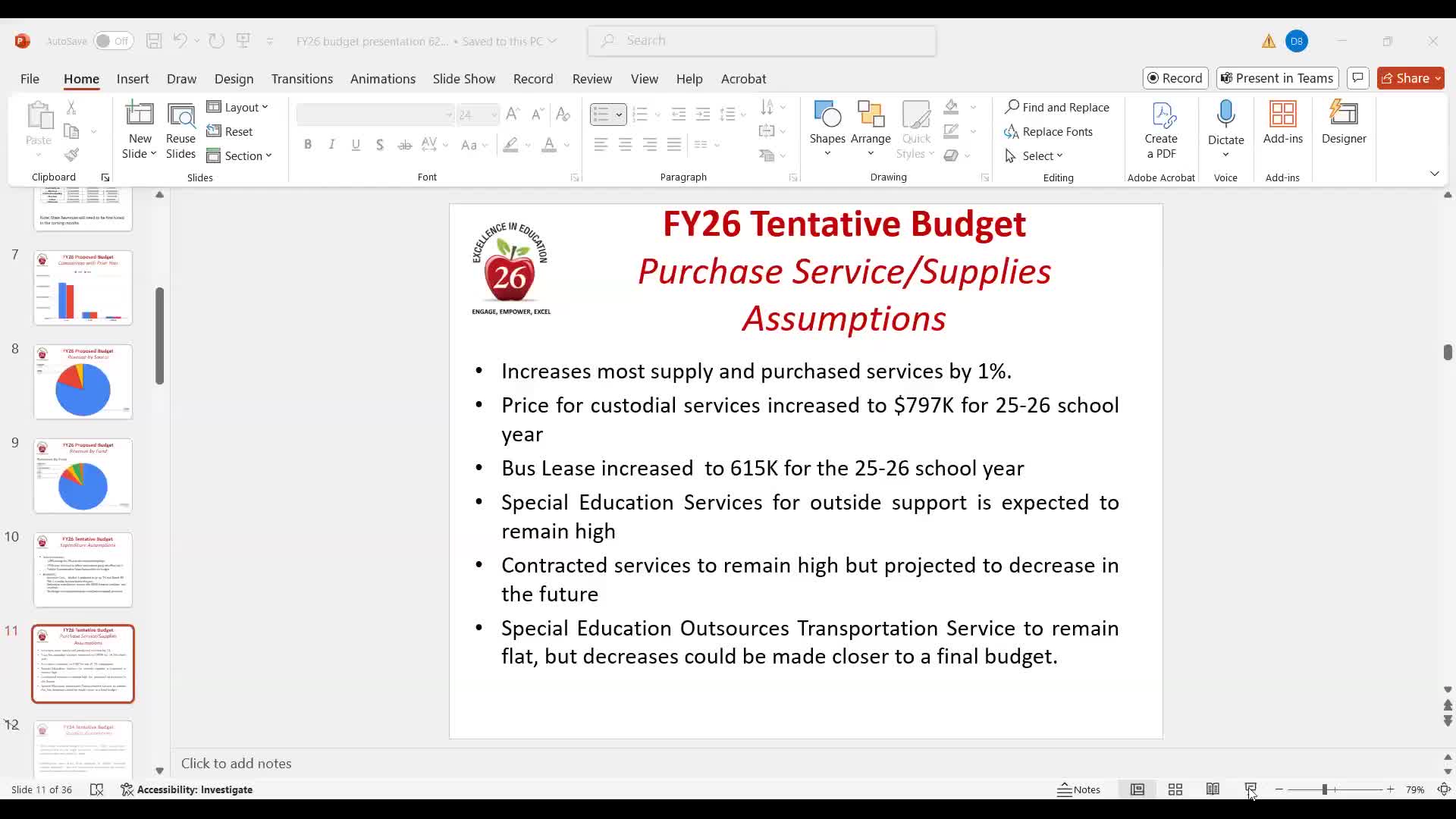
Summary
Associate Superintendent David Shepherd presented the district's tentative FY26 budget, emphasizing a balanced operating budget, referendum capital spending, a projected $26 million ending fund balance and anticipated pressure on transportation reimbursements and certain federal/state revenues.
Cary CCSD 26 administration presented a first look at the tentative fiscal year 2026 budget at the committee-of-the-whole meeting on June 23, outlining revenue assumptions, expenditure plans and near-term uncertainties.
David Shepherd, who presented the report, said the tentative budget shows the district maintaining a balanced operating budget while drawing down referendum bond funds for capital projects. Shepherd said the district anticipates an ending fund balance of roughly $26 million, driven in part by referendum proceeds recorded in the prior fiscal year.
Shepherd walked the board through revenue assumptions: a 99.5% levy collection rate; a CPI figure of 2.9% used for the levy; an expected return of some state evidence-based funding increases and a projected reduction in CPPRT revenues to pre-COVID levels (about $250,000). He also flagged a projected 20% reduction in annual transportation claim and Medicaid reimbursements, saying the state allocation for transportation had not increased to match rising district expenditures.
Expenditure assumptions include average salary increases tied to settled contracts (3.55% used for nonunion and administrative groups), benefit cost increases (medical ~7%, dental ~5%), continued high contracted services costs (special education and outsourced transportation) and a planned vehicle purchase to reduce future out-of-district transportation costs. Shepherd said the district anticipates total expenditures of about $51 million when referendum-funded capital projects are included; operating funds remain balanced when those capital dollars are separated.
Shepherd emphasized uncertainties that could affect FY26: state funding distribution delays, CPI volatility, supply-chain and construction costs, and staffing shortages that drove approximately $1 million in contracted services this past year. He outlined a timeline for public display and adoption: the budget would be placed on public display next week, shown for roughly 30 days as required by state statute, followed by a public hearing and approval set for Aug. 26, with subsequent filing to county clerks and ISBE.
Board members asked for clarifications, including showing how much of year-to-year variance is driven by referendum funds; Shepherd agreed to add that detail for the budget hearing. The administration also previewed planned capital projects funded by the referendum and explained that some high expenditure totals reflect planned multi-year capital draws rather than recurring operating costs.
Shepherd concluded by noting the district’s strong fund balances relative to past years and the intent to maintain a cautious, balanced approach while investing in curriculum, technology and capital improvements funded through the referendum.
Clarifying details from the presentation: the district used a conservative 99.5% levy collection assumption, CPI at 2.9% for levy planning, projected CPPRT to return to about $250,000, anticipated a roughly 20% cut to transportation and Medicaid reimbursements, and expects to draw down referendum bond funds over several years rather than reflect them as recurring revenue.