Get Full Government Meeting Transcripts, Videos, & Alerts Forever!
Get email alerts on the Elementary Math Curriculum topic
No spam. Unsubscribe anytime.
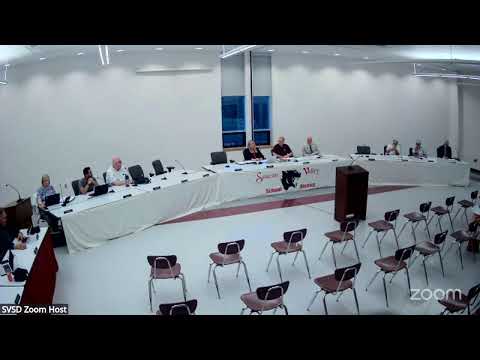
Saucon Valley board approves Spring Math for K–4 and pilots eSpark for K–2
Summary
The Saucon Valley School District board voted to implement Spring Math as a schoolwide intervention for grades K–4 and to pilot the eSpark adaptive practice program in grades K–2, moving the district to a multi-tiered approach to strengthen computation and fluency.
The Saucon Valley School District Board of Directors voted to implement the Spring Math intervention for all K–4 students and to pilot the eSpark adaptive-practice program in grades K–2, the board heard at its regular meeting.
Jamie Braxmire, a district staff member who led the elementary presentation, said the district will keep Math in Focus as its Tier 1 core curriculum and add Spring Math as a 15‑minute, class‑wide intervention during the district’s intervention period. “We are proposing tonight, that we pilot eSpark for the upcoming school years in grades K through 2 and that we move forward with implementing the Spring Math in all grades K through 4, during intervention time,” Braxmire said.
The change follows a year of work by a math lead team and a half‑year pilot. Braxmire told the board the district formed a core math lead team and partnered with a vendor identified in the packet as Patan to deliver professional development; teachers also piloted programs in the fourth quarter. The district will continue using Math in Focus for about an hour of daily whole‑group instruction and use Spring Math to screen all students, deliver a scripted 15‑minute daily class intervention, and flag students needing targeted Tier 2 or 3 small‑group work. For differentiated practice, the district will use either eSpark (K–2 pilot) or IXL (grades 2–4), with eSpark described as roughly 10–15 minutes per day of personalized practice.
Braxmire said Spring Math is aligned with cognitive science research, uses a peer‑modeling tutoring structure and scripted daily routines, and is intended to provide consistent K–4 processes for building computation and fluency. She told the board Spring Math requires ongoing training and quarterly data reviews with lead teams to monitor progress and identify dips.
Public comment included a resident who said she was “excited to see all the things about Spring Math on the agenda for tonight.” Board members asked for additional teacher input and for ongoing progress reports; Braxmire agreed to share results during the coming year.
Budget and procurement details: board discussion included cost and budget placement. A board member characterized the program cost as about $17,000 and called that “a drop in the bucket”; Braxmire said the district budgeted for a tier‑2 intervention and for the eSpark pilot and confirmed recurring annual licensing costs for software programs. She also said the district purchased Math in Focus for only one year because a next edition was rumored for 2025 and the district did not want a multiyear lock‑in without observing results first.
Pilot and staff details: Braxmire said several teachers piloted Spring Math and/or related pilots at the end of the year; she named Miss Davison, Mrs. Campbell, Mrs. Lemaster, Miss Hand, and Mr. Bernd as participants in spring trials and listed Mrs. Schultz, Miss Hand, Miss Davison and Miss Dennington as members of the core math lead team. Braxmire said kindergarten teachers preferred paper‑and‑pencil materials and that eSpark was selected for K–2 after the team reviewed more than 15 resources.
Implementation timeline and scope: Spring Math will be used to screen the full class and provide a 15‑minute daily intervention; students flagged by the system would receive small‑group Tier 2/Tier 3 supports during intervention time. eSpark, if adopted after the pilot year, would provide daily adaptive practice primarily online for K–2; IXL would remain in use in grades 2–4 for differentiated practice while the district finalizes choices.
Votes at a glance • Items 5 (Spring Math) and 6 (eSpark pilot): motion to approve items 5 and 6 was made and seconded; the board approved the motion (one board member recorded as opposed). The motion text as read at the meeting: “Can I get a motion to approve items number 5, Spring Math, and items number 6, eSpark math?” Mover/second: not specified in the public transcript; vote: approved, 1 opposed.
The board requested ongoing progress reports on computation and fluency; Braxmire and district staff committed to sharing results during the coming year. District staff also emphasized training and quarterly data review as part of the Spring Math implementation plan.