Get Full Government Meeting Transcripts, Videos, & Alerts Forever!
Get email alerts on the Traffic Safety topic
No spam. Unsubscribe anytime.
After child’s death, Jersey City residents demand immediate street-safety actions; council president calls for special meeting
Summary
Public commenters pressed the council to accelerate Vision Zero measures after the killing of 6-year-old Eli Bender; speakers demanded lower speed limits, hardened infrastructure and enforcement; Council President Waterman asked for a special meeting with public safety officials to respond rapidly.
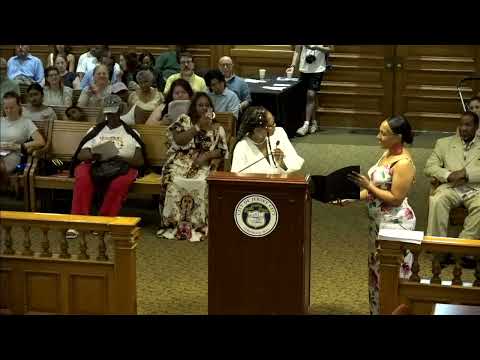
The Jersey City Municipal Council heard an extended and emotional public-comment session focused on street safety and the recent death of 6-year-old Eli Bender, who was struck and killed while crossing an intersection. Dozens of residents, advocates and parents demanded immediate action, including lowered speed limits, hardened infrastructure, and stepped-up traffic enforcement.
Speakers representing advocacy groups and families outlined a multi-point plan they said the city could implement quickly. “How many more people have to die?” asked Nick C., a resident and bicyclist who told the council that infrastructure and enforcement are failing. Traffic Reform Warriors and other local groups read an open letter with five key demands: citywide 20 mph speed limits, hardened infrastructure (planters, concrete curb extensions), dedicated traffic enforcement officers, emergency funding for the Department of Infrastructure, and full implementation of the city’s Vision Zero plan.
Public-safety recommendations in public comment included automated enforcement measures, leading pedestrian intervals at intersections, prohibiting dangerous turns, and converting curbside parking to fire and safety lanes. “We could convert just 1% of curbside parking into fire lanes like other cities do,” speaker Danielle said, adding that short-term changes could save lives while longer redesigns proceed.
Speakers named specific operational changes they want: “Dedicate 6 officers to full time traffic enforcement,” Ashley urged, and “implement automated enforcement, especially in school zones.” Members of the Traffic Reform Warriors and parent groups also asked for a transparent reporting app (Watts) to be restored, and pressed for an accelerated timeline for curb extensions and protected bike lanes.
Council President Waterman responded to the chorus of public demands by proposing a special meeting in the coming week that would include the public-safety director and the assistant public-safety director. “I’d like the public safety director there,” Waterman said, requesting the administration to provide representatives so the council and advocates could “start tackling this ASAP” and produce near-term steps for the next council meeting. Corporation counsel said the council could assemble a public, non-executive meeting and staff would supply legal and procedural options for follow-up.
Advocates and residents pressed the council to act before the next regular meeting on July 16 and to use every tool available — enforcement, engineering and education — in parallel. Several speakers said they would judge elected officials in the coming election cycle by who “acted” and who did not. Council members agreed to seek memos from legal staff on investigatory options and next steps for accelerating Vision Zero measures.
The session closed without a formal, council-wide directive or ordinance, but with a clear commitment from the council president to convene city public-safety leadership and interested community groups to discuss concrete near-term actions.