Get Full Government Meeting Transcripts, Videos, & Alerts Forever!
Get email alerts on the Criminal Justice Staffing And Technology topic
No spam. Unsubscribe anytime.
Pennington County prosecutors, public defenders press for more staff as caseloads rise and digital evidence grows
Summary
State’s Attorney and public defender staff told commissioners that felony prosecutions fell in 2024 but misdemeanors and digital evidence demands are increasing, prompting requests for more lawyers, administrative capacity and AI tools to process video and transcripts.
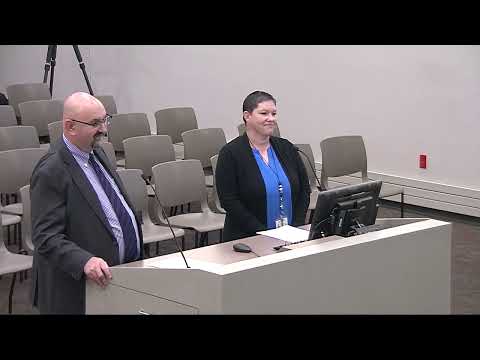
State’s Attorney Laura Retzel and Public Defender Eric Witcher told the Pennington County Board of Commissioners on June 24 that while felony filings dipped in 2024, the courts are seeing a steady rise in misdemeanors, retail-theft cases and digital evidence that is stretching existing staff and budgets.
Retzel said her office prosecuted 7,975 cases in 2024 and that drug- and theft-related filings have increased the burden on prosecutors. “The caseload is just too much,” she said. “I can’t prosecute everything anymore with what I’ve got.”
The concern centers on two pressures: case volume and the time required to review modern digital evidence. Retzel and Witcher described large increases in body‑worn camera, door-cam and surveillance footage arriving with cases. Retzel proposed expanding the office’s use of artificial‑intelligence tools to transcribe and triage video and audio, saying, “It can look at 10 different videos and pull apart what’s unique into each of them so you only have to watch one video.” Witcher, describing the defense perspective, said manual review of hours of footage is now unsustainable for attorneys or staff who must prepare cases and meet court deadlines.
Both offices cited national and local caseload standards as points of comparison. Witcher noted American Bar Association guidance that equates to roughly 150 felony cases per attorney per year; his office’s felony caseloads have been far higher historically. Retzel highlighted a recent drop in felony filings (1,396 in 2024, down from 1,672 in 2023) but said misdemeanor filings grew about 5.5% and that retail‑theft prosecutions in particular are increasing the number of lower‑level cases the system must process. “We’ve taken a hard stance on retail theft,” she said, and commissioners heard that enforcing that stance increases routine misdemeanor trials and pretrial work.
What commissioners heard as specific budget requests: - State’s Attorney’s office: additional prosecutor positions (Retzel listed four new attorneys and an office manager as priorities in her materials) and expanded licensing for AI-assisted legal research and media‑review platforms to reduce attorney time spent on transcription and video review. - Public Defender’s office: retention and recruitment tools and continued investment in the office’s case‑management and evidence‑triage software (Witcher described new case‑management software and a subscription to a defense‑focused AI transcription/search product used to reduce review time).
Retzel and Witcher also told the board that specialty courts, juvenile diversion statutes and statewide standards affect staffing needs. Retzel said that Supreme Court rules that create obligations for multidisciplinary specialty courts have effectively required additional prosecutor time even where the legislature has not allocated new staff. Witcher urged the board to consider how local policy choices and state law interact with local budget pressures.
Why it matters: County officials and the public are juggling three linked priorities—public safety, manageable caseloads for constitutional defense and feasible budgets. Prosecutors said they are prosecuting more low‑level cases (retail theft, DUI and other misdemeanor matters) while still carrying violent and complex felony dockets; the defender’s office reported heavier evidence workloads and uneven attorney availability. Both offices said technology (AI transcription, video‑search tools and modern case management) can reduce time and cost, but licensing and implementation require a budget commitment.
What commissioners asked for next: Several commissioners asked for clearer measures—how many attorney hours go to video review, how many misdemeanor cases could be diverted to non‑criminal alternatives, and how much AI tooling would save in staff time. Retzel and Witcher agreed to provide more detailed cost estimates and a phased plan for technology and staffing needs so the commission can evaluate tradeoffs with other budget priorities.
Ending: The conversation closed with a recognition from board members that public safety demands are rising while county budgets are constrained. Commissioners asked the state’s attorney and public defender to return with narrower, costed options—short‑term purchases (AI subscriptions to triage evidence) that would reduce hourly workloads, and longer‑term staffing plans tied to caseload metrics the county can track. The board scheduled follow‑up work during the remainder of the budget process.