
Judge keeps child with kin, orders virtual and in-person visits to resume for Lazarus Richardson
Get AI-powered insights, summaries, and transcripts
Subscribe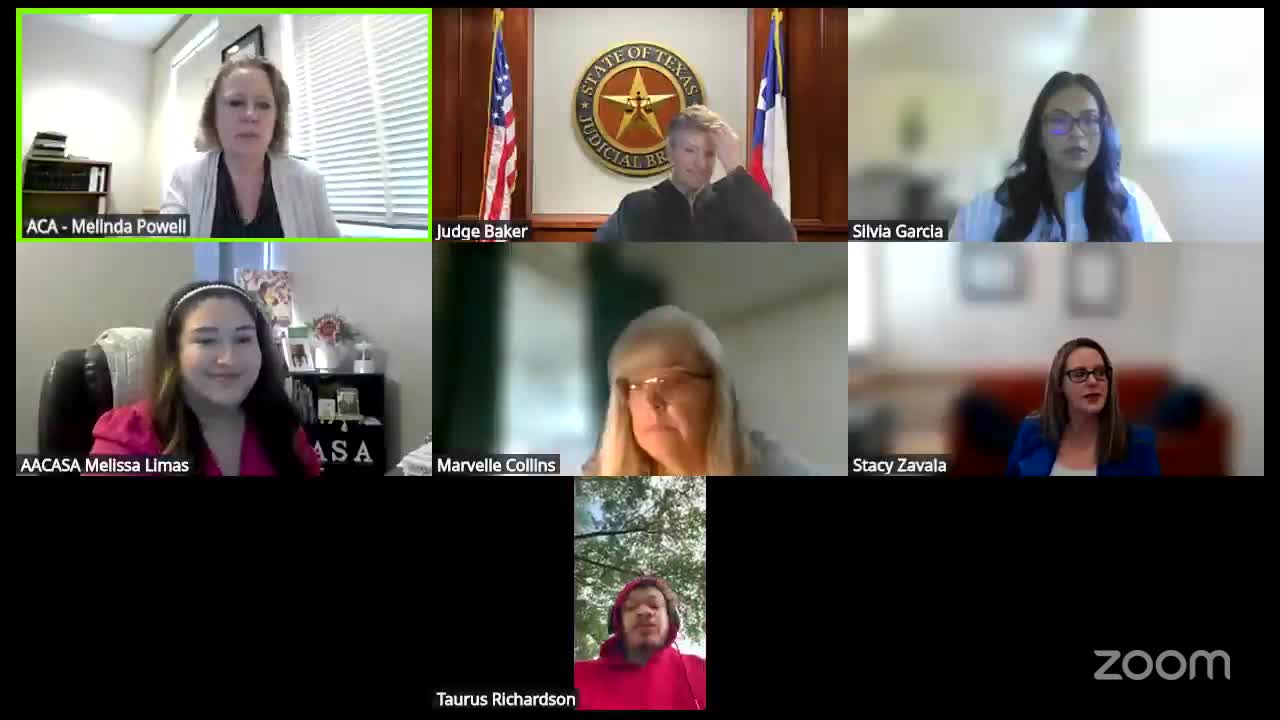
Summary
At a permanency review conducted via Zoom, the judge continued the Department as permanent managing conservator and the child’s current kinship placement, ordered weekly virtual visits to begin no later than next week and allowed in-person visits to start; the court set a review hearing for December.
A judge in the High Plains Child Protection Court continued the Department as permanent managing conservator and ordered both virtual and in-person visits to resume for 2‑year‑old Lazarius (Lazarus) Richardson, during a permanency review conducted by Zoom on a finding of good cause.
The judge said the Department would remain the child’s permanent managing conservator and the child’s current placement would continue. The judge set the next permanency review for December and told the parties the court expects substantial progress toward reunification by that time.
The court’s action came after testimony from Sylvia Garcia, the Saint Francis permanency specialist assigned to the case, who reported that the child “is doing very well in placement” and that placement staff were working to enroll him in daycare or a Region 16 early pre‑K program to improve socialization. Garcia said the child’s placement is meeting his needs and that staff were arranging visitation plans with both parents and siblings.
Lorraine Lucero, attorney for the father, questioned why virtual visits had not started sooner because, she said, the father had completed required services under the mediated settlement agreement. Lucero asked, “he completed those requirements quite a while back, isn’t that correct?” Garcia acknowledged the father had completed counseling and BIP courses and that virtual visits “should start no later than next week.”
Garcia told the court the father had completed twelve BIP classes, counseling and parenting classes, and a drug program; she said she had not personally sent the father for drug screening since taking the case but that recent department records reflected a negative screen. The court confirmed the father may begin in‑person visits in coordination with placement now that the settlement agreement’s conditions had been met. The judge emphasized this was based on the mediated settlement terms: “that was an immediate settlement agreement… you can start seeing the child in person as well as the virtual visits.”
Father (identified in court only as Mister Richardson) told the judge he lives in Arlington, Texas, and said long‑distance travel will limit how often he can come: “I could try once a month.” The judge and attorneys discussed that in‑person visits will require coordination around travel and childcare plans if the child goes to Arlington for visits.
The mother, identified in court as Miss Pineda, was described by Garcia as employed but recently switched jobs, facing eviction and having had her vehicle repossessed; Garcia said Pineda is engaging with services, permitting weekly contacts with the permanency specialist and participating in supervised visits at placement so other siblings can be present. Garcia reported she had arranged for Pineda to apply to Esther’s House for housing assistance that morning.
Stacy Zavala, attorney for the child, and placement representatives described substantial logistical complexity: Lazarius has siblings both in town and out of town, and placement has been transporting the child to weekly multi‑hour sibling visits each Saturday. Zavala said placement had “a pretty huge obligation” and requested a meeting to explore scheduling and location changes so placements could have some relief while preserving parent and sibling contact. Garcia confirmed a caseworker meeting was scheduled for the following day at 12:30 to address coordination, and participants planned a larger meeting with placements the following week.
Melissa Lemas with CASA (Court Appointed Special Advocates) reported visiting the children and said Lazarius “is doing really great with his grandparents,” urged parents to pursue driver’s licensing for transportation, and asked to be given the father’s contact information so CASA could reach out and support him.
The judge also reminded parents that the Department holds permanent managing conservatorship and that the court’s role going forward is to achieve permanency for Lazarius. The judge noted, “Lazarius has been in care now for 614 days,” and told the parties the court expects services to be completed and progress toward reunification by the December review. The judge said termination of parental rights was not currently before the court but reiterated the need for parents to demonstrate sustained progress.
The court directed that virtual visits commence weekly for one hour (with counsel and department discussion about possibly increasing frequency or splitting visits into two shorter sessions better suited to a 2‑year‑old), allowed in‑person visits to begin once coordinated with placement, continued the Department as permanent managing conservator and the child’s placement, and scheduled the next permanency review in December.