
Savannah-Chatham County schools recommend holding millage at 17.481 mills after public hearing
Get AI-powered insights, summaries, and transcripts
Subscribe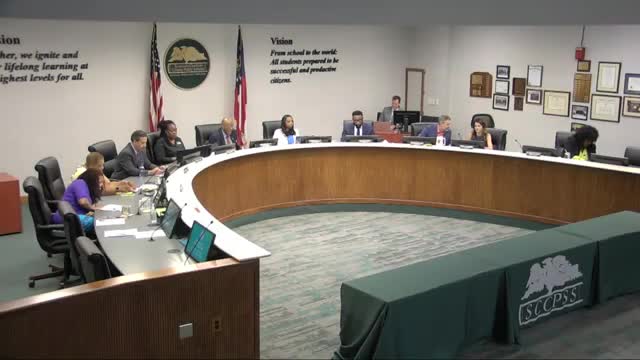
Summary
At a June 25 public hearing, Savannah-Chatham County Public School System staff presented the proposed budget and recommended keeping the maintenance-and-operations millage at 17.481 mills. Dozens of residents urged a full rollback, citing rising assessments, declining enrollment and concerns about administrative spending.
At a June 25 public hearing, Savannah-Chatham County Public School System officials presented the district's budget and recommended no change to the current maintenance-and-operations millage rate of 17.481 mills for fiscal year 2026, then took public comment from residents and business representatives urging a rollback.
Superintendent Dr. Watts framed the budget as "more than just dollars and cents," saying it reflected the district's priorities for about 36,000 students and listed investments the administration had prioritized, including high-dose tutoring at several schools, additional preschool classrooms, differentiated support for struggling schools, and raises for frontline employees. "Our budget is a reflection of our values," Dr. Watts said.
In a detailed presentation, finance staff explained the Taxpayer Bill of Rights process set by the Georgia General Assembly and implemented by the Georgia Department of Revenue. The presentation noted that each taxing jurisdiction must calculate a rollback rate to offset inflationary increases in the digest and that any tentative millage set above the rollback rate triggers required public notices and three public hearings. The presenter said, "For fiscal year 2026 Savannah Chatham County Public School System recommends no change in the current millage rate of 17.481 mills." The presentation included sample tax calculations: using a $250,000 home with only the state regular homestead exemption, the district's maintenance-and-operations tax under 17.481 mills was shown as an estimated $2,272.53 (with higher and lower example totals of $2,097.72 and $1,922.91 depending on assessed value changes).
Speakers at the hearing focused primarily on tax impacts. Freda Smith, a homeowner and commercial property owner, said she compiled district budget documents into spreadsheets and asked, "why it is that between fiscal year 2019 and now coming up on 2026, the revenue has increased by 68% at a time when school enrollment has gone down by 5%." Beth Maserone, a retired reading teacher, urged a full rollback and suggested the district adopt zero-based budgeting; she also referenced a previously reported $28,000,000 surplus and said the system maintains about two and a half months of operating reserves. "I humbly put forth a suggestion for your consideration that would fully roll back the millage rate," Maserone said, asking the board to consider rolling the rate to 16.826 mills.
Business and community speakers reiterated support for literacy and attendance initiatives but pressed the board on taxes. Bert Brantley, speaking for the Savannah Chamber, thanked the district for transparency around expenditures and said the chamber supports consideration of a millage rollback to ease pressure on local businesses. Several residents who identified themselves as seniors or fixed-income homeowners described sharp assessment increases and said higher property tax bills risk forcing long-time residents from their homes.
Commenters also pointed to staffing and administrative-cost questions. One speaker cited a report claiming district administrative staff rose from 26 to 136 in ten years and urged expense reductions rather than higher taxes. Others urged the board to review underused properties and capital projects as part of broader cost management.
Several speakers noted a legislative item they said will appear on the November ballot: House Bill 782, described in public comment as the "Chatham County Schools Tax Relief Act," which commenters said would ask voters to limit CPI-based increases. The hearing transcript records that a number of residents asked the board to delay final approval of the budget until those and other questions are answered; however, no board vote on the final millage rate occurred at this hearing.
The hearing concluded after public comment. A motion to adjourn was moved and seconded and approved by voice vote. The district accepted public comment and the presentation stands as the district's recommendation to keep the millage at 17.481 mills; final millage adoption will occur in a subsequent formal board action outside this hearing.
Ending: Board staff and residents indicated further discussion will continue at upcoming board meetings and through public materials the district posts to its website.