Lifetime Citizen Portal Access — AI Briefings, Alerts & Unlimited Follows
Senate roundtable panelists warn against forced sale of western public lands in budget proposal
Loading...
Summary
Senator Martin Heinrich, chairing a roundtable of senators and public-land advocates, warned that a newly resurfaced proposal to mandate sales of public lands would permanently remove access and protections on large tracts of western lands.
Senator Martin Heinrich, chairing a roundtable of senators and public-land advocates, warned that a newly resurfaced proposal to mandate sales of public lands would permanently remove access and protections on large tracts of western lands.
Heinrich said the proposal, originally contested by the Senate parliamentarian, aimed to force the sale of "2 to 3,000,000 acres" and later versions remain under review. "Once these lands go into private hands, we will not get them back," he said. "That's horseshit."
The panel included Hillary Tompkins, a former solicitor at the U.S. Department of the Interior; Land Tawney, former president and CEO of Backcountry Hunters & Anglers; Jess Johnson, government affairs director for the Wyoming Wildlife Federation; Jocelyn Torres, chief conservation officer at the Conservation Lands Foundation; and Dr. Mike Tracy, a community health physician and volunteer with the Continental Divide Trail Coalition.
Why it matters: Panelists said the language under consideration is not a targeted, community-driven land transfer process but a broad mandate tied to budget reconciliation that could funnel most sale proceeds toward federal tax measures instead of local infrastructure, conservation or mitigation. That, they said, would undercut the outdoor recreation economy, tribal treaty rights, wildlife habitat and local planning.
Tompkins said the Interior Department already has authorities and processes to consider disposal of federal lands and that a blanket congressional mandate would short-circuit stakeholder engagement. "Once public land is sold, it's gone forever," she said, urging that tribal nations be consulted where public lands overlap off-reservation treaty rights or sacred sites such as Mount Taylor in New Mexico.
Speakers emphasized economic and practical consequences. Tawney framed the issue as both cultural and fiscal, saying public lands support a U.S. outdoor economy he estimated at about $1.2 trillion: "With that recreation comes $1,200,000,000,000 in the outdoor economy that is based on public lands." Jocelyn Torres and Senator Catherine Cortez Masto said many lands proposed for sale are unsuitable for housing and that successful local examples, like Nevada's Southern Nevada Public Lands Management Act (SNPLMA), use a deliberative process that returns funds to state projects such as habitat restoration, water infrastructure and recreation improvements.
Panelists and senators also raised water and national-security concerns. Tawney and others warned that headwaters and watershed protection could be impaired if private owners control critical sources of western water. Senator Cortez Masto highlighted military installations and said nothing in the proposal prevents foreign entities from purchasing lands that could affect training areas.
Local engagement and alternatives: Several panelists and senators said community-driven, statutory processes already exist — for example, the Federal Land Policy and Management Act (FLPMA) framework and state-level programs such as SNPLMA — and argued those processes should be used or improved rather than circumvented in reconciliation. Johnson and others urged that land disposition be decided "at the table" with county commissioners, state officials, tribes, conservation groups, recreation stakeholders and local residents.
Tribal concerns: Tompkins and other panelists pressed that the proposal lacks clear protections for tribal treaty rights, sacred sites and cultural resources. She said tribes should be offered co-management options and right-of-first-refusal when disposals touch ancestral territories.
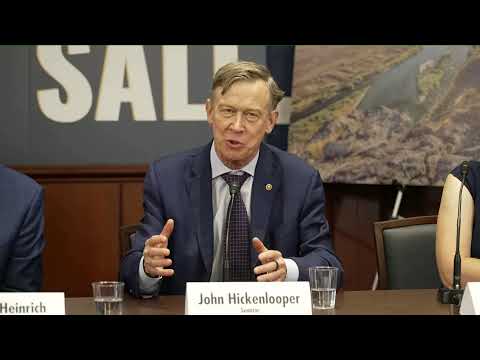
Panelists described wide, bipartisan pushback from local governments, sportsmen's groups, conservation organizations and ordinary outdoor users. Senator John Hickenlooper noted local resolutions and calls from municipal and county governments across western states opposing the forced sell-off.
What was not decided: The roundtable was a fact-finding and advocacy forum; no formal votes or legislative actions occurred. Participants urged senators to pursue deliberative, local planning-based solutions to housing or infrastructure needs rather than a wholesale mandate tied to federal budget reconciliation.
The session closed with Heinrich saying that while many of the places discussed "may be nothing special," they are often "everything to" the people who use and depend on them.