Get Full Government Meeting Transcripts, Videos, & Alerts Forever!
Get email alerts on the Zoning Rewrite Campgrounds topic
No spam. Unsubscribe anytime.
Zoning rewrite will update campground definitions; board members flag ambiguity over private vs. commercial use
Summary
County zoning staff presented proposed campground definition changes as part of a broader zoning rewrite. Board members said distinctions between 'commercial' and 'private' campgrounds remain unclear and asked for clearer, enforceable language.
Zoning staff updated the Board of Adjustment on June 23 about a broader rewrite of the county zoning ordinance and new, more detailed campground definitions proposed for the code.
Laura (zoning staff) told the board the draft would go back to the zoning commission for a public hearing in August and, if advanced, to the Board of Supervisors in September for adoption. The draft expands the existing single-sentence campground definition and attempts to distinguish public, commercial and private campgrounds and set sanitation and conditional-use expectations.
Several board members said the draft definitions still leave important questions. One member criticized the proposed commercial versus private distinction, saying the language—"a commercial campground is a business that provides designated areas typically involving a charge for use"—does not clearly separate commercial operations from small private uses where a landowner might occasionally allow guests. The member noted that a tenant or a property owner allowing someone to park a trailer temporarily could be interpreted as a "private campground" under the draft, which would make enforcement and permitting unclear.
Staff said the rewrite aims to reduce trips to the Board of Adjustment by adding administrative waivers for small departures (for example, minor setbacks) and by reformatting rules into tables for easier public use. The draft also proposes measuring setbacks from the closest point of a structure (eave or soffit) and tightening survey and subdivision procedures.
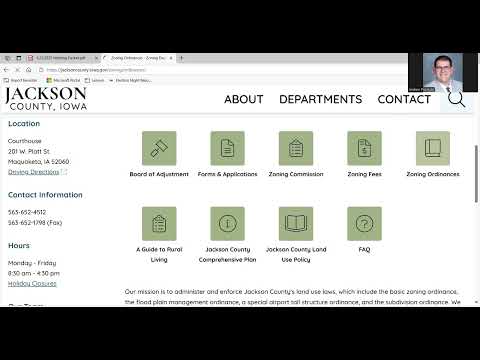
Board members asked staff to make the campground definitions more operational—specifying maximum site counts, whether short paid overnight stays qualify as commercial use, and what sanitary infrastructure is required when sites are offered regularly. Staff encouraged board members to review the current draft on the county website and provide written input before the zoning commission public hearing.
The presentation was informational; no formal action was taken.