Get Full Government Meeting Transcripts, Videos, & Alerts Forever!
Get email alerts on the White River Habitat Restoration topic
No spam. Unsubscribe anytime.
Sumner celebrates start of $58 million White River habitat project to restore more than 200 acres
Summary
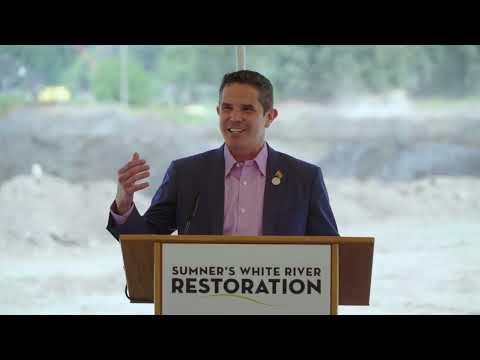
Sumner Mayor Kathy Hayden and city and regional partners on Saturday celebrated the start of construction on the White River Habitat Project, a $58,000,000 restoration effort that city officials said will return more than 200 acres to natural floodplain and reduce flood risk for businesses and nearby residences.
Sumner Mayor Kathy Hayden and city and regional partners on Saturday celebrated the start of construction on the White River Habitat Project, a $58,000,000 restoration effort that city officials said will return more than 200 acres to natural floodplain and reduce flood risk for businesses and nearby residences.
"Actions speak louder than words, and this project is a strong action," Mayor Kathy Hayden said at the event at Sumner City Hall grounds.
The project is one of four White River restoration efforts in Sumner and city officials said it is funded by a mix of state and local sources, including the state Puget Sound Acquisition and Restoration program, the Floodplains by Design account and Pierce County Flood Control Zone District funding, together with Sumner utility ratepayers. Pierce County Executive Ryan Mello told the crowd that the county is contributing $17,700,000 to the effort.
"I'm so proud that Pierce County is a funder to the tune of $17,700,000 to make this project happen," Mello said. He described the work as a multi-benefit project that will protect people, businesses and habitat while restoring salmon runs.
City Administrator Jason Wilson and other officials credited a long-running, multi-stakeholder dialogue that included the Puyallup Tribe and Muckleshoot Indian Tribe, multiple city councils and county and state partners. According to participants, that dialogue group has met repeatedly over roughly the last decade to build trust and shape project design.
Patrick Reynolds, technical staff with the Muckleshoot Indian Tribe fisheries habitat program, said the project was intentionally designed to be dynamic. "If I come back to this project in 10 years and everything looks the same, I failed," Reynolds said, underscoring that the restoration is intended to allow the river and floodplain to evolve.
Project contractors and designers named during remarks included Goodfellow Brothers Construction, which completed early earthwork, and Rodarte Construction, which officials said is working on site now. Designers with Natural Systems Design and legal counsel with Van Ness Feldman were also acknowledged.
Officials said the project aims to deliver multiple benefits: increased salmon habitat and fishing grounds that tribal partners say help fulfill treaty rights; reduced flood risk for Sumner’s industrial and commercial areas that support regional freight and local businesses such as Delano’s Coffee and Penny’s Salsa; and improved transportation facilities for vehicles, pedestrians and bicycles.
Organizers marked the celebration with an unveiling of an original painting by local artist Mario Haber that will hang at Sumner City Hall and with printed commemorative pieces for partner organizations. A public site tour and community refreshments from local producers were planned following the remarks.
City officials emphasized that construction had already begun and that the event was a ceremonial milestone rather than the start of work. They said the restoration is phased and will require ongoing coordination among tribal, city, county and state partners.
For now, officials said, the emphasis is on implementation and monitoring: bringing the design built during years of dialogue into the field and observing the river’s response over time.