Get Full Government Meeting Transcripts, Videos, & Alerts Forever!
Get email alerts on the School Libraries topic
No spam. Unsubscribe anytime.
Teachers, librarians and community urge Pasco School Board to restore librarians and clerks at secondary schools
Summary
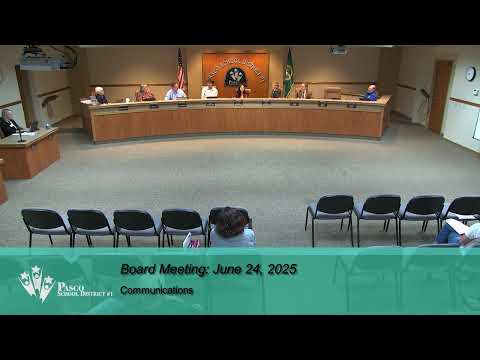
Speakers at the Pasco School Board meeting urged the district to restore certified librarians and library clerks at secondary schools, warning that reduced staffing will limit student access to books, research instruction and safe supervised spaces.
Speakers at the Pasco School Board meeting urged the district to restore certified librarians and library clerks at secondary schools, warning that reduced staffing will limit student access to books, research instruction and safe supervised spaces.
“Without adequate staffing, the value of this valuable resource becomes inaccessible to students, underutilized, and unmanaged,” said Elizabeth LeCompte, who addressed the board during the public‑comment period. She specifically warned that Pasco High School and Stevens Middle School were slated to lack dedicated librarians and said that outcome would harm equity.
Several certified school librarians described concrete impacts if clerks and librarians are not replaced. Stephanie Post, librarian at Verdi Robinson Elementary, cited state and national studies and said high‑poverty schools without certified teacher‑librarians show lower reading outcomes and graduation rates. “Schools with certified teacher librarians had an average five‑year 85 percent graduation rate compared to 76 percent for high schools without certified teacher librarians,” Post told the board, attributing the figure to a Washington state study she cited.
Judy Hatchett, librarian at Chiawana High School, told board members that her building — with more than 2,000 students and 125 teachers — had been informed it would receive zero clerks. “There is no way it is going to be physically possible for one person to take care of the size of our libraries,” Hatchett said. She warned that instruction, textbook distribution, and students’ access to technology help would suffer.
Anna Doerndorf, librarian at Frost Elementary, described the librarian role as “chief information officer” and read OSPI‑style definitions: a certificated teacher with a library endorsement who collaborates with classroom teachers and supports school improvement work. Doerndorf argued clerks and librarians are distinct roles and cannot be substituted for one another without reducing library services.
Maria Lee, who identified herself as “the president of the association,” framed libraries as safe spaces for students. “By taking away our librarians or our librarian clerks, you are affecting our most vulnerable students,” Lee said.
Nut graf: Several librarians and district staff warned that removing clerks and not replacing certified secondary librarians would reduce instructional support, impair collection and materials management, and disproportionately affect high‑poverty and multilingual schools.
What speakers asked the board to do Speakers asked the board to restore librarian and clerk staffing at affected buildings, to honor state definitions for certified teacher‑librarians, and to consider the equity implications of leaving high‑need schools without library professionals. Some speakers linked their request to larger conversations about levy funding for programs such as arts and extracurriculars.
District reaction and context The board and superintendent did not take immediate action during the meeting; district staff later noted that some positions were “on hold” while staffing placements were finalized for new schools. Meeting presenters said the district is working to place staff, avoid layoffs, and staff two new high schools while managing a budget shortfall; they said more granular placement decisions were still underway and that staffing decisions depend on certifications and program needs.
Ending: Board members thanked speakers and said they would continue work on staffing and budget planning. Several speakers urged the board to consider the state guidance and research cited in their remarks when finalizing staffing for the 2025–26 school year.