Get Full Government Meeting Transcripts, Videos, & Alerts Forever!
Get email alerts on the Strategic Plan topic
No spam. Unsubscribe anytime.
Moline council breaks into groups to draft strategic-plan goals; infrastructure, housing, economy and quality of place prioritized
Summary
At a strategic-plan work session the council split into two groups, discussed mission and vision edits, and produced candidate goals across pillars including infrastructure, housing, economy and quality of place to inform an action plan staff will draft for July.
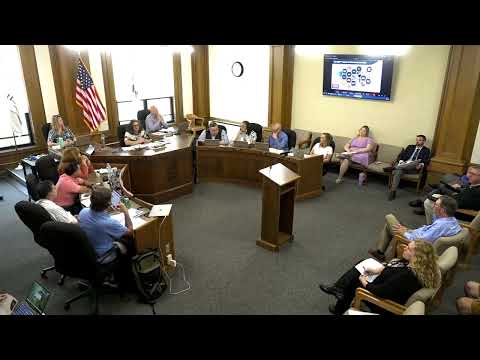
The Moline City Council convened a strategic-plan work session and divided into two groups to draft and consolidate goals for a new strategic plan that officials said must guide city priorities on infrastructure, housing, economy and quality of place.
Mayor and staff opened the work session explaining the process and timeline: goals from the evening will be collated, staff will draft objectives, and the council aims to review a second draft by mid-July and seek adoption alongside the budget in mid-to-late July. "Once we get the goals established, we're gonna bring those back, present everything to council July 15," a staff presenter said. The council agreed staff would return with a refined action plan and reporting framework.
Councilmembers split into Group A (Castro, Macias, Timmy, Raza) and Group B (Finch, Murphy, McNeil, Schmidt) and each group developed candidate goals under the pillars. Group A proposed infrastructure goals that emphasized increasing safety in public spaces (lighting, cameras, targeted site work), modernizing utility infrastructure (including lead service and southern slope development), improving roads/alleys/sidewalks, and pursuing environmentally resilient infrastructure projects such as green stormwater practices and solar initiatives. Group B focused on maintaining and promoting a sidewalk capital improvement plan and improving walkability to connect residents with local businesses and services.
On housing the groups advanced complementary priorities: zoning and incentives to enable more housing production (including accessory dwelling units and other diverse housing types), preserving existing housing stock, expanding housing options for vulnerable residents (examples included tiny-home and supportive models), addressing homelessness through partnerships and programs, and reducing regulatory barriers that impede development. One councilmember proposed a population-growth target as a planning benchmark to prompt actions on density and housing supply.
Economy goals included creating a comprehensive developer "toolbox" that lists incentives, grants, tax and development tools so prospective investors can assess opportunities quickly; streamlining permitting and regulatory processes to help small businesses launch more rapidly; supporting workforce and training programs in partnership with educational institutions; implementing cost-savings measures and better fiscal reporting; and continuing advocacy for passenger rail funding at the state level. Several alderpersons noted recent state interactions and said legislative work remains ongoing to secure capital for passenger rail studies and projects.
Under quality of place, councilmembers recommended prioritizing riverfront redevelopment, improving community engagement and program awareness (including multicultural events and marketplaces), investing in social infrastructure that connects residents, and a broad "beauty" or neighborhood-upkeep goal intended to reduce blight and generate a "wow" factor for neighborhoods. Councilmembers noted some existing commitments from the prior plan will carry forward; staff said objectives already underway will be reflected in the new action plan.
Discussion also touched on mission and vision wording. Councilmembers debated whether to trim the mission language to focus on the city’s core role: "to provide for the health, safety and welfare of our community," while moving fiscal responsibility language into values and the vision.
Ending: Staff will assemble the council’s goals from the session, draft measurable objectives and an implementation schedule, and present a version for council review in mid-July ahead of budget adoption.