Get Full Government Meeting Transcripts, Videos, & Alerts Forever!
Get email alerts on the Public Health Naloxone topic
No spam. Unsubscribe anytime.
Moses Lake council pauses ordinance after months of debate over Narcan machines
Summary
Public health workers, medical professionals and residents urged the council to keep naloxone access while others said library placement was inappropriate. Council debated an ordinance to restrict Narcan distribution on city property and voted to take more time to craft policy.
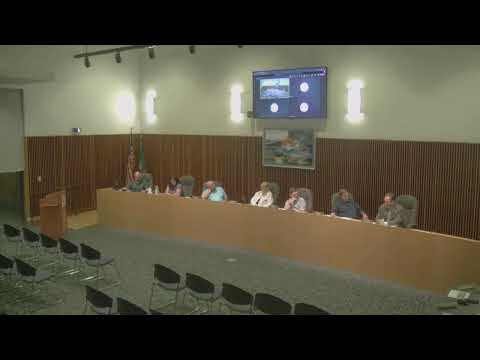
Moses Lake City Council on Tuesday paused a proposed ordinance that would restrict distribution of naloxone (Narcan) on city property after hours of public comment and debate from council members, health officials and community groups.
The issue drew dozens of residents and health professionals to the meeting, with several speakers urging the council not to curtail community access to the opioid reversal drug. ‘‘Narcan rapidly reverses the deadly effects of fentanyl or other opioids in minutes and can be easily administered as a nasal spray by anyone,’’ said Dr. Natalie Pollock, a board‑certified pediatrician who has practiced in Moses Lake for 16 years.
Why it matters: Council members said they face competing public‑safety and community‑standards concerns — especially after a Narcan vending machine installed at the public library became a focal point of local controversy. Advocates said easy access can save lives during fast fentanyl overdoses; opponents argued the library is an inappropriate permanent distribution site and that location decisions should involve broader community input.
Public testimony and staff comment were lengthy. John Chapman, executive director of Thriving Together North Central Washington, told the council that his organization ‘‘decided at this point in time to keep a focus on that primary discussion that we will remove the machine from the library’’ while partners work on alternate distribution plans. Grant County Health District administrator Theresa Atkinson asked council to ‘‘please table or reconsider the ordinance’’ and warned of unintended consequences from a strict ban.
Council members debated several approaches. Victor Lombardi moved to table the current draft ordinance; the motion failed after discussion. Council then considered a proposal to allow Narcan distribution on city property only with council permission, a motion that also failed to pass. Members repeatedly asked staff and community partners to return with a clearer set of options and implementation steps.
Councilmember Victor Lombardi summarized the council’s original impetus: ‘‘The original genesis was to have the machine moved at the request of citizens,’’ he said, describing how placement — not the medication itself — had driven public controversy. Mayor Swartz thanked speakers and staff and directed additional outreach to public‑health and service providers.
Next steps: Council asked staff to convene the public‑health partners and interested stakeholders, collect written proposals for approved distribution sites, and return to the council with a refined policy and recommended exceptions. The council did not adopt a ban and left the existing statutory Good Samaritan exception for individuals administering naloxone intact while considering formal rules for organized distribution.
Ending note: Multiple speakers stressed Narcan’s life‑saving role while also urging a coordinated, community‑based distribution plan; council members said they will weigh those operational and liability questions before taking further formal action.