Cobb County releases 2026 proposed budget with 2% COLA, no new general‑fund positions

5070437 · June 25, 2025

Get AI-powered insights, summaries, and transcripts

Subscribe
AI-Generated Content: All content on this page was generated by AI to highlight key points from the meeting. For complete details and context, we recommend watching the full video. so we can fix them.

Summary

County finance staff presented a $49.4 million increase in the county'wide operating budget for fiscal 2026, proposing a 2% cost‑of‑living adjustment for all employees, merit increases on top of that, and no new general‑fund positions apart from four already included.

Cobb County finance staff on Tuesday presented the county'wide proposed operating budget for fiscal 2026, showing a $49.4 million net increase driven largely by personnel costs, higher water purchases and other operating increases and a proposed 2% cost‑of‑living adjustment (COLA) for all employees.

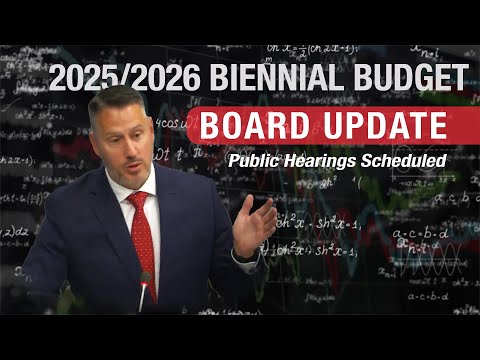
The presentation, given to the Cobb County Board of Commissioners during a scheduled budget briefing, laid out how the county moved from an initial roughly $7 million general‑fund shortfall to the proposed balanced budget, described changes to individual funds including water and fire, and set a public hearing schedule that culminates with budget and millage adoption on July 22.

The proposal would keep the general fund roster unchanged for new positions, while formally funding four new positions (two in the fire fund and two in the water fund). County finance staff said they have filled 106 vacancies since the last snapshot and that 2% pay‑scale adjustments would apply to both step and non‑step employees.

"Our starting point for the general fund was roughly a $7,000,000 shortfall," a county budget staff member said during the presentation. The staff member later described the combined proposed increase across all funds as roughly $49,400,000 and said the general fund alone would increase by about $18,300,000, of which roughly $16,000,000 is personnel related (pension, health care and roster updates).

Why it matters: the county'wide proposal would raise recurring personnel costs through a combination of a 2% COLA and merit payments, fund vacancies at 100% when filled (the county budgets vacant positions at 50% while they remain open), and absorb higher utility and commodity costs in enterprise funds that can translate into future rate or service pressures.

Key components and numbers

- COLA and merit: The budget proposes a 2% across‑the‑board pay‑scale adjustment for all employees plus merit increases on top of that; the presentation described a maximum combined increase of up to 5% for non‑step employees (2% COLA + up to 3% merit) and a maximum of 4.5% for step‑in‑grade employees. County staff said the COLA alone is estimated to cost about $8.6 million countywide and would cover more than 5,000 employees.

- Positions and vacancies: The county reported filling 106 positions since an earlier snapshot and noted a prior countywide request for 290 positions. The proposal includes no new general‑fund positions; it does include four new positions (two in fire and two in water). Staff reiterated the long‑standing practice of budgeting vacant positions at 50% until filled.

- Water fund: Business‑type funds are the main driver of the operating increase; the water fund increase was described in the presentation as between $11.4 million and $13.8 million (the staff slides show water operations rising by roughly $11.4M with later slides listing a $13.8M change), with about $7 million of that attributed to higher water purchases from Marietta Water Authority and increased costs for chemicals, parts, electricity and fuel.

- Fire fund contingency: The fire fund showed a contingency increase of about $5.1 million tied to digest growth and the shift in debt service in prior years that strengthened the fund balance. Staff asked the board to consider whether the current millage rate for the fire fund should be revisited to avoid repeated large swings in contingency.

- Claims/health funds and double counting: Staff noted the county's claims funds (health, dental, liability, workers'comp) account for approximately $5.9 million of the operating increase; because those funds receive transfers from other funds, that amount is reflected in multiple fund totals (an accounting artifact, not separate new countywide dollars).

- Indirect cost allocation: An update to the county's indirect cost allocation (required by governmental accounting standards) would add about $2.5 million to charges allocated across funds. Staff said 9‑1‑1 is exempt from indirect cost allocations.

- Impact items and board items: The presentation highlighted roughly $2.3 million in impact items tied to board agenda actions already approved (for example, contract changes and leases). The county also listed $2.2 million in finance staff recommendations that reflect trend, contract and usage changes; not all items are increases and some are reductions tied to one‑time contingencies adopted previously (for example, removal of an All‑Star contingency and reduction of the Board of Commissioners contingency).

- 9‑1‑1 fund: Staff warned the board that the 9‑1‑1 fund is now running a net loss (first seen in 2024) because the per‑line revenue is capped at $1.50 and expenditures continue to rise. The recommendation for 2026 is to use fund balance in the short term while continuing to pursue a legislative change or general fund support in future years.

Capital and grants

Capital budgets were presented separately from the operating budget. Staff proposed an $83.7 million placeholder for expected grant awards (including ARPA dollars in their final year of spend in 2026) and said actual grant appropriations would be established when awards are received.

The presentation also addressed the county's stadium capital maintenance trust and the county's annual contribution (an amount staff described as just under $1.5 million now); staff said they would provide the board with the contribution schedule and the county cap amount for the trust.

Budget process and schedule

Finance staff laid out a public schedule: the first Board of Commissioners budget meeting is July 8, a special meeting moved to July 16, and a final public hearing and adoption of the budget and millage is scheduled for July 22. Staff said the budget binders and supporting documents (including line‑item downloads) would be posted on the county website for public review.

Discussion and next steps

Commissioners questioned several items during the presentation, including clarity on how COLA and merit will be administered, the sustainability of the 9‑1‑1 fund, and the schedule and public availability of budget binders and adopted versus final budget numbers. A county budget staff member said COLA and merit payments would be processed on separate payrolls to avoid conflating cost‑of‑living adjustments with performance‑based merit increases.

Several commissioners suggested pursuing legislative relief for the 9‑1‑1 fee cap; staff said the county meets monthly with lobbyists and will raise the issue with the delegation.

No final votes on the proposed budget were recorded at the briefing; staff presented the proposal for board consideration and scheduled the formal hearings and adoption vote later in July.

The county provided detailed backup in the budget binder and indicated it would post the presentation and underlying spreadsheets on the Cobb County finance web pages for public review.