Get Full Government Meeting Transcripts, Videos, & Alerts Forever!
Get email alerts on the Human Services Mou Dap topic
No spam. Unsubscribe anytime.
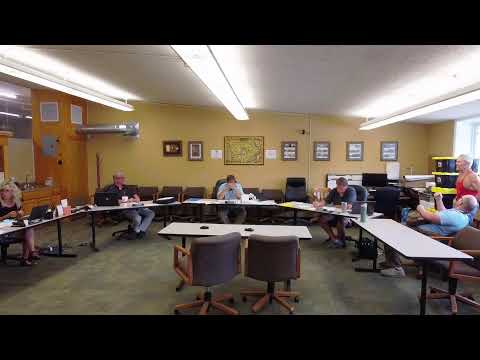
Benton County delays decision on regional Disability Access Point MOU amid staffing, liability and equipment questions
Summary
Supervisors tabled action on an amended memorandum of understanding to move local Disability Access Point services into a regional structure after detailed discussion about who would employ and insure existing staff, how vehicles and equipment would be handled and who would pay benefits.
Benton County supervisors on Tuesday tabled action on an amended memorandum of understanding (MOU) that would transition local Disability Access Point (DAP) staff and services into a regional structure and shift responsibilities for a county-employed staff member known as Sarah.
The board postponed a decision after about two hours of discussion that centered on employment continuity, payroll and benefits, liability insurance and the ownership or transfer of vehicles and technology assigned to the local program.
Julie Davidson, “COO and interim CEO for the region,” told supervisors the draft MOU had been revised to remove some language and to align with a model used by Johnson County. Davidson said the region would cover liability insurance and that the MOU could be limited to a one-year term beginning July 1: “Just we could even say just review, Sarah,” she said, describing flexible language under consideration.
County officials and the region’s interim leadership described competing constraints: Benton County taxpayers purchased some office equipment and vehicles that have been used by the regional program, but the East Central Region had funded others. Davidson said vehicles were purchased with regional funds and could be licensed in the DAP’s name so the county would not carry the insurance burden.
County representatives pressed for clarity on who would employ Sarah if Benton County declined to keep her on payroll. Davidson and other region staff said the intended arrangement was for a single county of employer ultimately to be designated through a future RFP process, but that in the short term Linn County had agreed to hire some individuals; that transfer could take about a month. “Sarah would be laid off for that month,” Davidson said, noting union rules could require new hires to start at entry pay tiers.
County legal and financial questions dominated the discussion. The county attorney’s office reviewed a Johnson County model and flagged the removal of certain dispute-resolution and performance-review language; supervisors asked that the MOU explicitly preserve channels to address employee performance and to require the region to provide liability insurance.
Supervisors also discussed practicalities: where an advocate or DAP employee would work physically, whether local office space would be rented back to the region and the mechanics for billing transportation and other reimbursable services. Davidson said the region’s ASO (designated administrative services organization) would handle mental-health transport billing under current state code.
After prolonged discussion of contract language, workforce transitions and asset ownership, the board voted to table the item and hold a special meeting Friday at 3:00 p.m. in the auditor’s office to decide whether to approve the county’s amended MOU and to authorize an officer to sign the termination of the existing state contract if required.
The motion to table passed on a voice vote.