Get Full Government Meeting Transcripts, Videos, & Alerts Forever!
Get email alerts on the Open Meetings Reform topic
No spam. Unsubscribe anytime.
Vermont working group begins Act 133 review, focuses on hybrid access, archiving and accessibility
Summary
A Secretary of State-led working group convened stakeholders to begin drafting best practices and options under Act 133, centering on running effective and inclusive meetings, training, hybrid access and whether/when recordings should be archived.
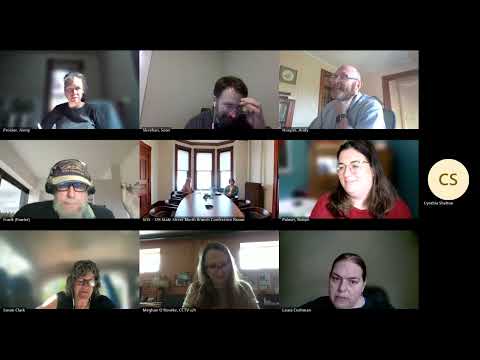
A Secretary of State convened working group met virtually and in person to begin implementing recommendations from Act 133, opening a months‑long conversation about hybrid access, archival recording practices and accessibility standards for municipal and state public meetings.
The meeting, chaired by Deputy Secretary of State Lauren Hibbert, brought state officials, school board and town representatives, accessibility advocates and public media providers together to lay out a schedule of topics and to identify primary stakeholders for each topic. “I just wanna start by saying this meeting is being recorded, because that’s now our requirement under open meeting law,” Hibbert said at the outset.
The group’s immediate task is to develop recommendations and tools on a broad set of issues carried over from the legislative session into the Act 133 implementation process. The topics scheduled across several meetings include running effective and inclusive meetings, training for public bodies on open meeting law, policies on recording municipal meetings and best‑practice guidance for hybrid participation. The working group will draft a report; recordings of meetings will be kept online until the report is published.
Why it matters: Vermont towns and municipal bodies vary widely in size, staffing and technical capacity. Stakeholders stressed the potential for hybrid access to broaden participation while also raising new costs, recordkeeping questions and equity issues. Participants said policy options should range from “small, medium and large” levels of technical sophistication so smaller municipalities can meet baseline expectations without incurring unsustainable costs.
In the meeting, public access and archiving drew sustained attention. Megan O’Rourke of the Vermont Access Network told the group she believes the state “can begin to archive meeting content in full for a longer period of time with metadata attached so that people can access those meetings.” Disability Rights Vermont’s Laura Cushman highlighted existing accessibility gaps for physical polling places and said the organization’s site surveys could help establish a baseline: “We have that data, and we know where polling places still struggle to be accessible,” she said.
Officials also flagged legal and records issues. The office plans to consult Tanya Marshall, the state archivist and chief records officer, about what municipal bodies are legally required to retain and what recordings can or should be kept beyond what the law requires. Hibbert said the office’s position remains that minutes are the official record under current law, and recordings are a separate archival or accessibility question to address in guidance.
Participants repeatedly underscored that there is no single technical or procedural solution that fits all towns. Andy Hooper, a longtime local official and technologist, urged the group to create tiered guidance so communities can scale up: “small, medium and large best practices” he said, would help municipalities move from minimal to more sophisticated setups. Others pressed for clarity about public comment structures, community standards for acceptable conduct at meetings, and options for submitting public comment when participants cannot attend in person.
Next steps and scheduling: the group confirmed it will meet on a roughly biweekly cadence to work through seven core topics plus a catchall agenda item. The next meeting will continue the “running effective and inclusive meetings” topic and include a presentation on the Civic Health Index by Robin Palmer of the Secretary of State’s office. The working group intends to begin assembling a draft report this summer and to develop a best‑practices subgroup to draft guidance between full meetings.
No formal votes or final policy decisions were taken at the session; the meeting was focused on scoping, stakeholder roles and setting timelines for future work. Recordings and meeting materials will be posted on the Act 133 working group web page for public review until the report is published.
Community members, municipal clerks, school boards and accessibility advocates will remain involved as the group moves from definitions and scope to draft recommendations in the coming months.