Get Full Government Meeting Transcripts, Videos, & Alerts Forever!
Get email alerts on the Economic Development Maritime topic
No spam. Unsubscribe anytime.
County officials press maritime prosperity zone, floating dry dock and workforce steps as state funds become available
Summary
Local economic-development and port leaders reported June 23 that Gulf County is preparing to pursue federal and state maritime-prosperity funds tied to a proposed floating dry dock maintenance and shipbuilding supply chain, while emphasizing workforce training as a top priority.
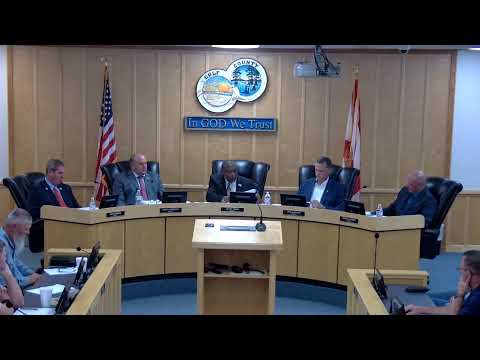
Local economic and port officials told the Gulf County Board of Commissioners June 23 they are pursuing planning and funding opportunities tied to a federal maritime-prosperity initiative and to a proposed floating dry dock maintenance, overhaul and repair (MOR) project.
Jim McKnight, serving on the local executive and planning committees, said an April 9 presidential executive order required a national plan for maritime prosperity zones and that Northwest Florida regions — with Mobile designated as a lead planning area — are eligible to compete for major infrastructure and workforce dollars. McKnight noted the county’s Port St. Joe shipyard sits in a federally designated opportunity zone, which could align the port for additional funding.
Why it matters: County officials said the designation and associated planning could unlock billions in national infrastructure and workforce training funding, half of which would support workforce programs, the rest infrastructure. Locally, officials said the proposed MOR floating dry dock aligns with ongoing Triumph Gulf Coast grant discussions and could create construction and long-term maritime jobs.
What was reported: McKnight described early inquiries from shipbuilding and maritime-parts firms interested in waterfront sites and modular construction opportunities. He told the board Triumph staff are reviewing an application supporting a floating dry dock repair facility and that additional documentation around job metrics was being added to strengthen the proposal. Officials emphasized workforce training needs, including a maritime academy partnership and opportunities to tie 21st‑century workforce programs and other grants to training pipelines.
No formal county action was taken to commit funds at this meeting. Commissioners and staff discussed next steps including inviting Triumph representatives and other state staff to visit local sites, refining an inventory of local assets, and incorporating regional workforce partners when preparing grant applications.
Next steps: Staff said they will continue to refine the Triumph application and develop an asset inventory for the maritime-prosperity submission, coordinate site visits for state staff, and pursue workforce-education partners to connect local residents to construction and shipyard jobs.