Get Full Government Meeting Transcripts, Videos, & Alerts Forever!
Get email alerts on the Accessibility Guide topic
No spam. Unsubscribe anytime.
State work group begins drafting accessibility guide for polling and public meetings; flags training, archiving and resource gaps
Summary
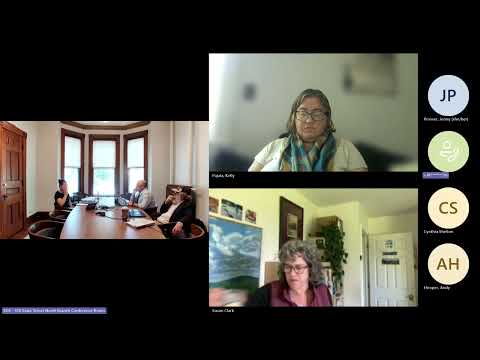
At a June 16 meeting, the Act 133 Open Meeting Law Work Group started drafting an accessibility guide for polling places and public meeting locations, discussed using Disability Rights Vermont survey data, and identified training, technical assistance and archiving gaps municipalities will need filled to run accessible hybrid meetings.
A state work group met June 16 to begin drafting an accessibility guide for polling places and other public-meeting locations and to identify what municipalities will need in training, technical assistance and equipment to run accessible hybrid meetings.
The discussion was led by a Secretary of State staff member who opened the session by saying, "we're going to start with our task force obligation to create an accessibility guide," and participants agreed the guide should address both polling-location requirements and the broader set of public meeting spaces where towns and municipal bodies conduct business.
The work group discussed two distinct but related aims: (1) a guidance product that explains existing legal requirements and practical, low-cost steps municipalities can take to improve access, and (2) the technical assistance and training that clerks and local officials will need to implement those steps. Speakers cited a 02/2018 Disability Rights Vermont (DRVT) survey of polling places — described in the meeting as covering more than half of Vermont polling locations — as a data source to identify frequent accessibility shortfalls. "If towns were to see Zoom meetings as a utility … the number of accommodation requests across the board are going to drop," said Kate, a work group member advocating for universal-design approaches.
Why this matters: participants framed the guide as an educational tool to help municipal officials and residents understand the baseline legal obligations (federal Americans with Disabilities Act and state public-accommodations rules referenced in the meeting) and to propose practical, tiered steps that smaller, under-resourced bodies could adopt. Several members warned small organizations face different barriers than large towns and recommended separating guidance by organizational size and resources.
Key discussion points and consensus items
- Scope and audience: The group agreed the guide should cover two tracks — polling locations (where vote administration and ADA-specific checklists were emphasized) and public meeting locations (town offices, school board rooms, regional commissions), and be useful both to voters and to officials who set up meetings.
- Sources and evidence: Participants recommended using DRVT's survey results (02/2018) and materials from the Vermont Human Rights Commission and the U.S. Department of Justice as starting points. The group noted DRVT's results suggested many common noncompliance issues; one presenter said between "one-third and two-thirds" of sites had ADA gaps according to the survey.
- Universal design vs. individual accommodations: Several speakers stressed universal design as a first step that reduces the need for individual accommodations, while acknowledging universal design alone will not meet all individual requests for ASL, large-print materials or other services.
- Training and delivery formats: Suggested training approaches included short video vignettes or "sound-bite" modules, shadowing/mentorship for clerks and chairs, checklists for meeting start-up and redundancy so more than one person can run equipment, and quick-start guides for common platforms (Zoom settings, auto-captioning). Attendees recommended brief, frequent training units rather than long workshops to improve uptake.
- Technical assistance and equipment tiers: The group discussed building a matrix of technical options (from low-cost website and Google-site posting to more robust hybrid setups), with price points and accessibility trade-offs for each tier. Participants urged listing free/no-cost options (for example, basic Google Sites or Zoom captioning) alongside paid solutions.
- Archiving and records: Members noted statutory retention and posting obligations and raised archiving as a distinct technical need. The Vermont State Archives and Records Administration (VSARA) and Vermont Historic Records resources were suggested as partners. The meeting recorded that current statute requires limited retention and posting timelines (participants cited a common 30-day posting/retention reference) and recommended the guide clarify what the law requires versus what is a best practice.
- Enforcement and statutory gaps: Several participants said some access failures appear to be enforcement or statutory-structure problems rather than mere lack of awareness. The work group noted that changes to statute or enforcement mechanisms are beyond the guide's immediate educational remit but could be included in the report to the legislature as suggested reforms.
Decisions, directions and next steps
- Drafting: The Secretary of State staff committed to preparing a very rough outline or draft of the guide for the group's next meeting so members and absent stakeholders can review and suggest material. The staff said they will also aim to update training materials to reflect recent legislative changes effective July 1.
- Outreach: The staff will try to recruit additional stakeholders for future meetings, specifically clerks' association representatives, school board association contacts and the Vermont Human Rights Commission.
- Meetings: The group set a follow-up focused meeting on the accessibility guide for July 10 at 10:00 a.m.; organizers said they will attempt to hold that session in person in Montpelier with hybrid access for remote participants.
- Research tasks: Members recommended compiling existing resources and surveys (DRVT polling survey, clerk training materials, VSARA guidance) and producing a matrix of equipment/technical options with approximate costs and accessibility trade-offs for presentation at a future meeting.
Practical concerns raised
Participants repeatedly emphasized differences among municipal bodies (selectboards, town meetings, regional commissions, solid-waste districts) and cautioned that a single, uniform "one-size-fits-all" checklist risks setting unreachable expectations for small, under-resourced organizations. Multiple speakers urged the guide to present tiered, scalable options and to separate legal-floor requirements from aspirational best practices.
Direct quotations in the text come from meeting participants recorded in the June 16 transcript and are attributed to the speakers who made them.
Ending
The work group left the meeting with a draft-outline task for Secretary of State staff, a plan to recruit additional stakeholders (clerks, human-rights staff and archivists) and an appointment to reconvene July 10 for a meeting devoted to the accessibility guide. Members said the next meeting will provide an opportunity to review the draft outline and the proposed matrix of technical options, training formats and archiving practices.