Get Full Government Meeting Transcripts, Videos, & Alerts Forever!
Get email alerts on the Hybrid Technical Assistance topic
No spam. Unsubscribe anytime.
Small subgroup offers options for hybrid meeting equipment, training and state support
Summary
A technical subgroup presented draft options for hybrid meeting setups, from phone-only access to in-room built-in systems, and proposed price points and grant targets to help municipalities implement interactive hybrid meetings that meet open-meeting requirements.
A Secretary of State working-group subgroup described options for the technical assistance, equipment and training municipalities would need to run hybrid public meetings and proposed compiling price points to support grant requests.
The discussion matters because the panel is charged under Act 133 to recommend the technical support needed for municipalities to run effective, inclusive remote and hybrid public meetings; the subgroup proposed a staged menu of options and recommended a state-supported resource to lower local burdens.
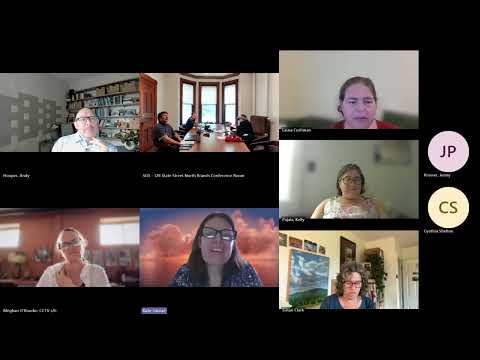
Meghan O'Rourke, a producer with CCTV Town Meeting Television in Burlington, summarized the subgroup’s work. She said the team had outlined a range of hybrid setups, from the simplest phone-in option to more sophisticated built-in audio-video rigs, and the goal was to identify price points that could justify grant funding. "Our goal is to come up with some price points so that if we are going to request or recommend as part of our working group, a grant that there is some... logical drive behind that grant recommendation," she said.
Panel participants stressed that hybrid must mean two-way participation: people joining remotely must be able to hear and be heard. The group noted existing statutory language requires interactive access for members participating electronically and that merely livestreaming a meeting without a way to participate does not meet the hybrid standard. Several participants recommended that telephone call-in access remain a supported option because some residents lack broadband or devices that handle video.
Accessibility and archival concerns were also raised. The federal GSA Section 508 resource and the Universal Design Project were cited as existing guidance; Frank (planning commission member and energy coordinator) pointed to GSA guidance on creating accessible meetings. Members discussed options to make interpreter and captioning services available via a centralized state resource or shared vendor pool to reduce turnaround time and cost for small towns.
Subgroup members also flagged human-capacity risks: hybrid meetings place new facilitation demands on clerks and volunteers and can require redundancy (trained backup operators) so a meeting does not depend on a single technical lead. The group discussed facilitation training and suggested standard scripts and rules of procedure to help reduce disruption and increase clarity for participants.
The subgroup agreed to post its draft spreadsheet and notes publicly and to share them with the working group. Members asked staff to include the subgroup’s hybrid-setup options in a draft report to the legislature, and to describe equipment, training needs and possible grant funding approaches. The working group will review the subgroup’s spreadsheet and pricing options at upcoming meetings and will continue developing best-practice guidance for hybrid meetings and polling-site accessibility.