Get Full Government Meeting Transcripts, Videos, & Alerts Forever!
Get email alerts on the Universal Design Accessibility topic
No spam. Unsubscribe anytime.
Vermont accessibility panel debates ‘universal design’ standard for public meetings
Summary
A Secretary of State working group discussed applying universal-design principles to make town and municipal meetings more accessible, weighing practical limits, legal obligations and training needs and agreeing to compile resources and language for a best-practices guide.
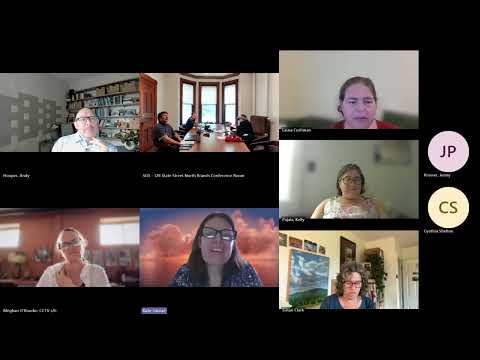
Members of a Secretary of State working group spent the meeting examining how to apply universal-design principles to municipal public meetings and annual meetings, focusing on what towns can do proactively so people do not have to request accommodations.
The discussion matters because the panel was convened under Act 133 to recommend best practices for “running effective, inclusive meetings,” including use of universal design, training on open-meeting law and guidance on recording and posting meeting materials. The group agreed it will compile resources and draft language the legislature or towns could use.
Sean Sheehan, elections director at the Secretary of State’s office, opened the meeting and framed the group’s charge to recommend best practices for accessibility and inclusive public engagement. “We have the best practices guide that we're working on, which includes universal design,” he said, noting the group also must identify equipment and training municipalities need.
Advocates and disability-policy experts cautioned the panel that universal design is not a single solution for every person. Laura Cushman, an attorney at Disability Rights Vermont, warned that even an extensive list of universal-design methods will not reach every individual and said the guide should include a fallback process for private requests. "There will still be people who are gonna fall through those cracks," Cushman said.
Kate LaRose of the Vermont Center for Independent Living emphasized the variety of needs and urged the group to treat universal design as an approach that benefits “everyone,” not only people with identified disabilities. "One of the things... is that there's no one-size-fits-all approach," LaRose said, recommending that the panel incorporate both universal elements and procedures to handle individual accommodation requests.
Participants suggested concrete, low-barrier items to recommend immediately: routinely enabling live captioning for virtual meetings; providing meeting materials in advance in accessible formats; and maintaining a town website where agendas and minutes are posted. Several members said training for town clerks and select-board members on recognizing and implementing accommodation requests is critical.
Legal obligations and remedies came up repeatedly. Panel members noted that Vermont’s open-meeting law requires public bodies to allow public participation in certain circumstances and that federal laws such as the Americans with Disabilities Act and public-accommodations rules apply. The group also discussed recent federal guidance on accessible meetings (GSA Section 508) and existing universal-design resources such as universaldesign.org and materials from the University of Washington.
Members acknowledged trade-offs between an inclusive ideal and municipal capacity. Some participants urged the panel to recommend state-level technical and financial supports — including a centralized list of interpreters, captioning services and shared equipment — to lower the burden on volunteer municipal officials. Others stressed that framing guidance as optional “best practices” could be read as permissive; they urged clarity about what is legally required versus recommended.
The panel agreed to compile existing resources, draft a framework for a best-practices guide and return to the universal-design topic at a future meeting. Jenny (last name not specified), the group convenor from the Secretary of State’s office, said staff will gather materials and propose a structure for the guide before the next meeting.
The group set a follow-up discussion on universal design for its next scheduled meeting and asked participants to send resources and examples to staff so the working draft can reflect both legal minimums and practical guidance for towns.