Get Full Government Meeting Transcripts, Videos, & Alerts Forever!
Get email alerts on the Hospital Investigation topic
No spam. Unsubscribe anytime.
Audit committee gets status update on Nashville General Hospital investigation; several recommendations implemented
Summary
The Metro Audit Committee received a progress report on the Nashville General Hospital investigation: about five of 12 audit recommendations have been implemented, a contract-management overhaul and DocuSign rollout are underway, and work continues to recover funds tied to a canceled valet contract and to verify new public‑records procedures.
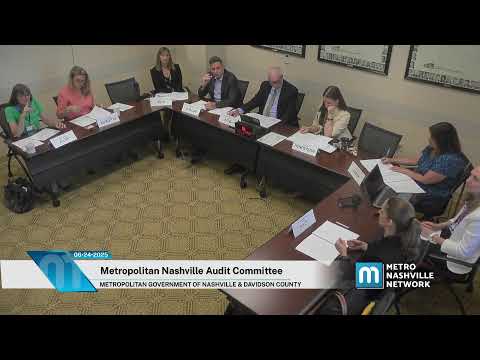
The Metro Audit Committee received an update on the ongoing Nashville General Hospital investigation and the hospital authority’s progress implementing the audit team’s recommendations.
Lauren Riley, Metro auditor, told the committee that the office’s lead investigator, Paul, has been meeting monthly with the hospital’s interim CEO and staff to track remediation. “So far about 5 of the 12 recommendations have been implemented,” Riley said.
The audit team reported contract‑management changes as a significant step. Riley said the hospital canceled a valet contract (one of the actions counted among implemented items) and has canceled or allowed to expire many other contracts that lacked board approval; one or two contracts that hospital staff wanted to keep were later submitted to the board for approval. The hospital has implemented a contract management system and DocuSign to record contract execution; Riley said Paul still needs to verify the DocuSign records.
Riley said hospital managers were investigating whether they can quantify spending related to a doctor who had operated at the facility without a written agreement; the hospital and Meharry Medical College self‑reported violations in that matter and legal processes to recoup funds are under way. On public records, Riley said the hospital has adopted a public‑records policy but the auditor’s office is still verifying whether the new procedure is operating as written.
Committee members urged the auditor’s office to compile a clear matrix of findings and resolutions to track progress. Committee member Jared asked whether the DocuSign rollout at the hospital suggested a broader Metro policy: “Is there an opportunity … to have something like DocuSign, if that’s Metro’s preferred, that we require that it be used?” Cher, another committee member, and Riley discussed that many Metro contracts already come through DocuSign and that lower‑dollar transactions under the Metro procurement threshold (discussed as the $50,000 threshold during the meeting) may still be executed without DocuSign.
Why it matters: The committee established the hospital review as ongoing old business at prior meetings; the check‑in keeps oversight visible while the auditor verifies that the hospital’s policy and process changes are effective. Committee members asked for documentation that will let the auditor verify implemented recommendations and asked staff to continue reporting back at future meetings.
The audit committee did not take formal action on the hospital item at this meeting; the update was for tracking and verification.