Get Full Government Meeting Transcripts, Videos, & Alerts Forever!
Get email alerts on the Housing Development topic
No spam. Unsubscribe anytime.
Developers, market analysts and residents debate Germantown village‑center plan and housing needs
Summary
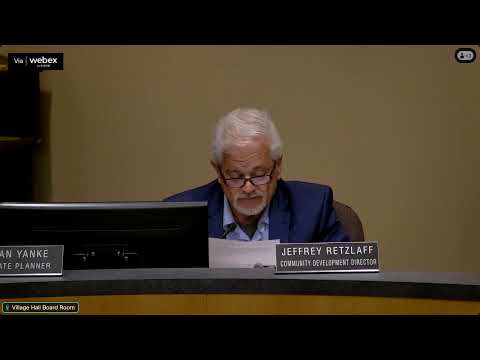
Village of Germantown officials spent several hours June 2 hearing market research, developer perspectives and resident views as they consider a proposed mixed‑use village center and how to respond to local housing demand.
Village of Germantown officials spent several hours June 2 hearing market research, developer perspectives and resident views as they consider a proposed mixed‑use village center and how to respond to local housing demand.
Pete Meggenberg of Meggenberg Research summarized a 2023 market study of the village‑center site and told the commission the study found "room for additional multifamily development" in Germantown. Meggenberg said the firm focused on 15 acres identified for the village center and tested development scenarios of 100, 200 and 300 units, saying such a site could be phased and include mid‑rise apartments, townhomes and town‑center elements.
Why it matters: consultants, developers and brokers told the plan commission that residential rooftops are a prerequisite for sustained retail and restaurant activity. "You need people in your community that are in place in order to support the village and the restaurants," Meggenberg said. Panelists argued that mixed‑use projects can increase local tax base per acre while providing housing choices for seniors, young professionals and families.
Market findings and development economics presented to the commission included: a 2023 Meggenberg study estimate of over 1,000 units of unmet regional multifamily demand; a rule‑of‑thumb multifamily density of roughly 20–22 units per developable acre for higher‑density product; and illustrative construction costs cited by speakers of about $350,000 per mid‑rise apartment unit (800 sq ft prototype). Panelists noted those costs make retail difficult to finance on a standalone basis in today’s market.
Developers and managers described the tenant and market mix they expect. Matt Maroney, CEO of Vanguard Partners, said his firm’s managed properties show a median resident income around $93,000 and low school‑age child yield from apartments (he cited roughly 0.03 students per unit in his portfolio). Cindy Schaeffer, a developer with projects in Mequon and Grafton, described mixed‑use projects that combine residential, public market space and restaurants; her Mequon project, she said, generated roughly $500,000 a year in tax revenue for the city and repaid public land costs over time.
Speakers and realtors at the meeting also laid out local housing market facts. Realtors said Germantown’s average single‑family sale price is in the mid‑$400,000s to $500,000s range and new‑construction homes typically begin in the mid‑$600,000s. Several realtors and developers urged more "attainable" housing forms — townhomes, side‑by‑side condominiums and narrower lot single‑family — as ways to expand opportunities for first‑time buyers and households priced out of new construction.
Financing and public incentives were a major topic. Multiple panelists said that, in the current financing environment, many larger mixed‑use projects require gap financing or public incentives such as a tax‑increment financing district (TID) to be feasible. Schaeffer and other developers described working with municipalities on multi‑version developer agreements and on TID durations; they said community‑negotiated concessions on design, infrastructure and timing can shorten TID terms.
Not all attendees supported dense multifamily on village‑center land. Multiple residents and trustees said they value Germantown’s existing character and want any change to be incremental and carefully managed. Public commentators and two written letters included with the record expressed both support for a village center and concern about scale: some urged the village to move forward with a mixed‑use center to retain residents and attract businesses; others asked for more public process and for the village to preserve the community’s character.
One planning‑action from the meeting: the commission noted earlier plan‑commission approval of a separate development, Sutton Farms, which will advance to the village board for consideration. The commission’s discussion on the village center identified next steps more in the form of process than votes: speakers recommended more public engagement, clearer redevelopment objectives, realistic commercial expectations and a granular gap analysis to identify any public financing need.
What officials said they will do next: commissioners and staff signaled they would continue outreach, share consultant materials publicly, consider a refined public engagement schedule (town halls, neighborhood meetings) and explore financial gap analyses and TID scenarios rather than approving a single plan on the spot.
Sources: Presentations by Pete Meggenberg (Meggenberg Research), Matt Maroney (Vanguard Partners), Cindy Schaeffer (Schaeffer Development), retail market data shared by Kevin Schmolt (Newmark), and public comments and letters submitted for the record.