Get Full Government Meeting Transcripts, Videos, & Alerts Forever!
Get email alerts on the Abortion Policy topic
No spam. Unsubscribe anytime.
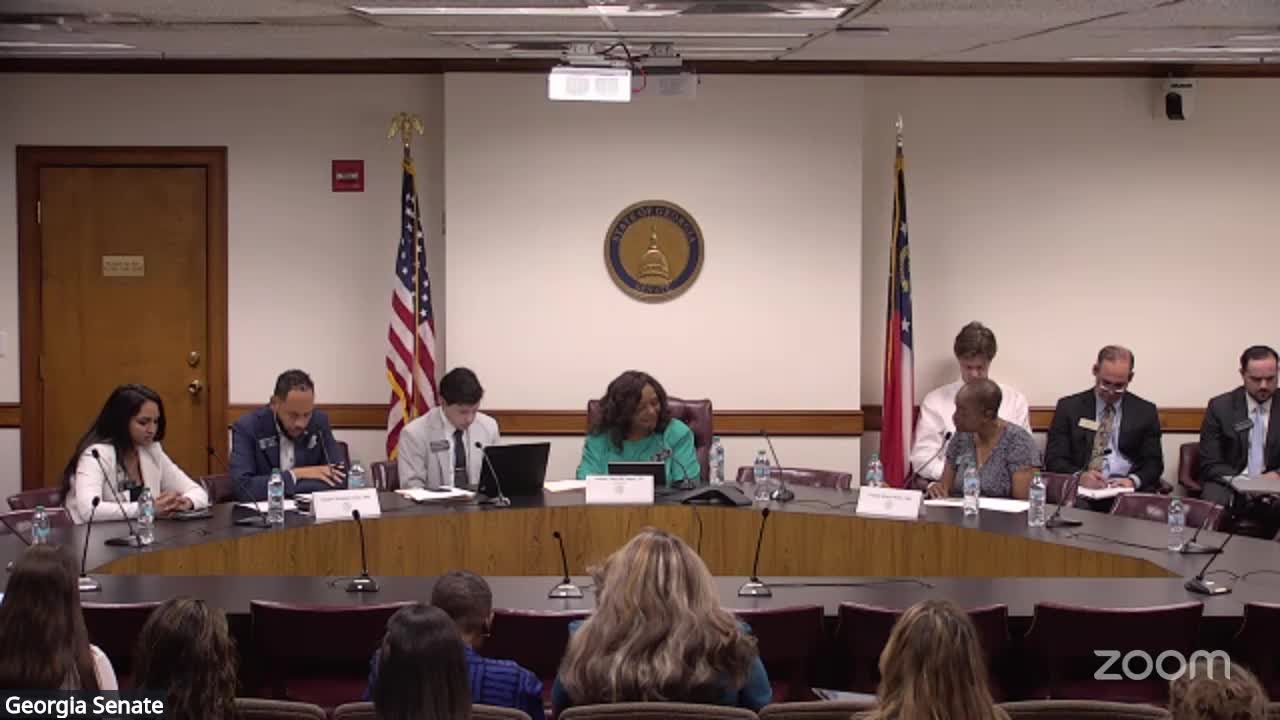
Georgia Senate panel hears testimonies on harms of six‑week abortion ban; families and clinicians call for legal clarity and policy changes
Summary
The Georgia State Senate Urban Affairs Committee heard testimony from families, clinicians and advocates who said the state's six‑week abortion ban has caused delays and confusion that contributed to preventable harm and deaths.
The Georgia State Senate Urban Affairs Committee heard more than a dozen hours of testimony on the effects of the state's six‑week abortion ban, with grieving family members, clinicians and legal advocates saying delays and confusion under the law have led to preventable harm and deaths.
Chairwoman Donzella James, the chair of the Urban Affairs Committee, opened the hearing on the third anniversary of the U.S. Supreme Court's Dobbs decision, which overturned Roe v. Wade. "This hearing is the most important place in the world to me," she said, and called witnesses to testify about the law's effect on reproductive health in Metro Atlanta and across Georgia.
Shanette Williams, who identified herself as the mother of Amber Nicole Thurman, told the panel that hospital staff withheld a dilation and curettage procedure that she said would have saved her daughter's life and that care was delayed for about 20 hours. "She was murdered by the hands of people that took the oath to do no harm," Williams said, describing her family's belief that her daughter's death was preventable.
Casey Murushak, who said she had a miscarriage of a child named Sawyer, told the committee she spent seven hours in an emergency department and then waited more than a week for the procedure she says she needed. "I should not have had to wait 8 days to have a dead baby removed out of me," Murushak said, adding that her doctors later found she had placenta previa and that an untreated hemorrhage could have left her unable to have children or cost her life.
Medical researchers and clinicians told senators the law has created an atmosphere of fear and uncertainty that affects how doctors treat pregnancy complications. Anna Newton Levinson, a behavioral scientist and health services researcher, described interviews with providers and patients showing that even people who qualify for exceptions experience denials or long delays in care. She summarized a case she said illustrated the problem: a patient with a cardiac condition whose care team agreed pregnancy endangered her life but who could not obtain the required certifications in time to receive a termination in Georgia.
Legal advocates testified that criminalization and broad bans increase the risk that patients and clinicians will face investigation or prosecution. Megan Hill, litigation counsel at If/When/How, said her organization's review of prosecutions showed 61 prosecutions of people who self‑managed abortions or had pregnancy losses, with more than 80% occurring in states that nonetheless include language purporting not to criminalize pregnant people. Hill also said a reproductive legal helpline logged 317 calls from Georgia through April 2024 and that calls rose again in January 2025.
Advocates called repeatedly for Attorney General Chris Carr to provide a formal legal opinion clarifying how the law should be applied in emergency and life‑threatening cases. Several witnesses and senators noted that Carr had been invited to testify but did not attend the hearing.
Advocacy groups urged policy changes to reduce maternal harm. Allison Kaufman, executive director of Amplify Georgia Collaborative, urged passage of the Reproductive Freedom Act, which she described as legislation to repeal existing bans and affirm the right to make pregnancy decisions without criminalization. Alicia Stallworth, director of Georgia Campaigns for Reproductive Freedom for All, urged mandatory public reporting of maternal mortality data and criticized the state's removal of members of the Georgia Maternal Mortality Review Committee after a ProPublica report.
Speakers who provide maternity care urged state action to bolster the perinatal workforce and nonhospital options for birth. Tamara Tate, a midwife and executive director of Atlanta Birth Center, said Georgia has only three birth centers and that expanding midwifery and birth center capacity and reimbursing doulas through Medicaid would help reduce maternal morbidity and mortality, particularly in rural and underserved areas.
Multiple senators expressed sympathy and said they would press for legislative changes. Vice Chair Sonia Halpern and others asked detailed questions about how the law affects end‑of‑life directives and whether hospitals are legally required to maintain life support for brain‑dead pregnant patients. Panel members said they would compile submitted testimony and may request further information after the legislative session.
The committee did not take formal votes or adopt actions during the hearing. Chairwoman Donzella James adjourned the session after collecting testimony and said the committee would keep the record open for written statements.
Why it matters: Witnesses framed the issue as both a legal and public‑health problem—arguing that unclear enforcement, criminalization risks and workforce strain are compounding Georgia's already high maternal mortality rates, especially among Black women. Several witnesses urged immediate clarification from the attorney general and longer‑term policy changes including Medicaid expansion, public reporting of maternal deaths and investment in midwifery and doula services.
The committee requested written copies of testimony and resource materials cited at the hearing, and several senators said they intend to pursue repeal of the ban and related policy measures in future sessions.