Get Full Government Meeting Transcripts, Videos, & Alerts Forever!
Get email alerts on the Interlocal Agreement Funding Governance topic
No spam. Unsubscribe anytime.
Cache County Fire District board forms steering committee to draft interlocal agreement and budget roadmap
Summary
Trustees discussed an interlocal agreement with Cache County covering funding, human resources, capital replacement and service levels; they created a steering committee to develop a road map and recommended legal and staff coordination before any countywide taxing authority is sought.
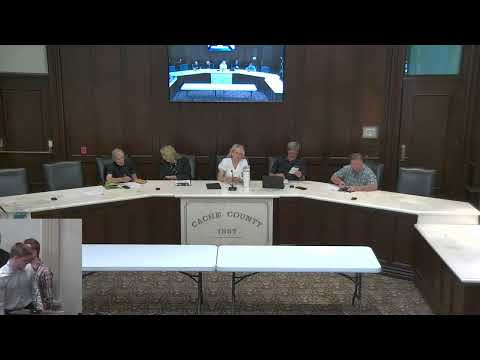
Cache County Fire District trustees on June 24 debated how an interlocal agreement with Cache County would handle funding, human-resources responsibilities and capital replacement as the newly formed district moves from formation toward a standing budget and possible future levy. The board voted to create a three-person steering committee to draw a road map for negotiations with county officials and the district’s attorney.
The issue matters because the interlocal agreement will determine which entities pay for day-to-day operations, who holds title to equipment and real estate, and how the district will phase in any countywide tax or levy to fund capital needs. Board members repeatedly raised concerns about fairness for cities that have already paid for stations and equipment, and about preserving local departments while achieving broad coverage across Cache County.
At the meeting, county representative Rod said the draft agreement “will need to go before the Cache County Council” because the county would front bills for services performed by the district during the transition. Rod also told trustees that in the near term, “human resources will stay with the cities,” meaning current municipal payroll and employment relationships would not immediately move to the district. The board heard that the district would likely assume funding for replacement of capital equipment as items age out, rather than changing ownership of existing city assets now.
Mayor Chris of Nibley voiced a common concern from smaller cities: “Are we going to be expected to pay to fund, let's say, Mendon to get a fire station?” Trustees responded that the transition could be phased and that a countywide levy or bonding would be a future step only after a base budget and service agreements are established. Board members noted Cornish and unincorporated areas are currently the only parts of the county without municipal fire-tax arrangements and that some county purchases, such as frontline engines and water tenders, are already titled to the county.
Larry Jacobson asked the board to consider equity across the district: “Are we trying to equalize the level of service across the entire district?” Trustees and staff said service levels will not be identical everywhere but that the district can plan benchmarks to raise parity where population growth and risk justify it.
Trustees described the expected transition as incremental. They cited the recently formed water district as a model: the water district initially received a base budget (board discussion referenced a historical figure around $300,000–$350,000) to operate and to hire administrative staff before seeking taxing authority. Board members said the fire district will likely adopt a similar phased approach: an initial base budget provided by Cache County, contracting for administrative support (for example, a contracted chief administrative officer), and then stepwise movement toward a levy or bonding for capital needs.
The board approved a motion to form a steering committee to “draw a road map of how to get from where we are to where we want to be.” The committee membership named in the motion was Lindsay Peterson (absent), Council Member Erickson and Larry Jacobson; the motion passed on voice vote with no opposition. Trustees said the steering committee will work with county legal staff, the district’s attorney (Amy, attending virtually), Chief Brady George and county staff to identify the elements the interlocal must include and to develop a recommended base budget for the district to use while it builds toward independent taxing authority.
Trustees emphasized several items the committee should address: a clear description of which services the district will fund immediately; whether an independent administrative chief officer will be an employee of the district or a contracted position; processes for replacing aging apparatus and for siting new stations; and how to preserve existing municipal departments and contracts in the near term. The board instructed the committee and legal subcommittee to return recommended language and a proposed budget for ratification at a future meeting.
The meeting also included a brief introduction of the district’s new fire chief, Brady George, who told trustees he has about 30 years in the fire service and recently moved back to the county. Chief George did not ask for immediate policy decisions but was listed as a participant in the transition planning and committee coordination.
The trustees adjourned with next steps assigned to the steering committee and the legal subcommittee; no changes to taxes, titles or operational control were approved at the meeting.