Get Full Government Meeting Transcripts, Videos, & Alerts Forever!
Get email alerts on the Housing Short Term Rental topic
No spam. Unsubscribe anytime.
Cache County workshop advances draft short‑term rental rules after complaints about a Wellsville‑area event rental
Summary
County staff circulated a draft ordinance after complaints about a property near Wellsville operating like an event center. Council and planning commissioners discussed requiring business licenses, inspections, parking limits and a conditional‑use permit for larger commercialized rentals.
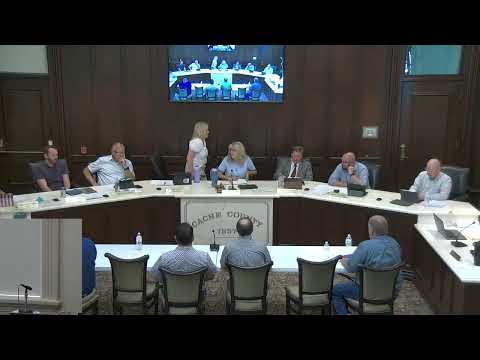
Cache County staff presented a draft short‑term rental ordinance during a joint workshop after members described a county property near Wellsville being used for large gatherings and frequent rentals that neighbors say have disrupted residential areas.
Why it matters: council members and staff said short‑term rentals are increasingly common in the county and that the current code has no uniform enforcement pathway. Officials said they want a minimal regulatory framework that identifies operators, ensures safety inspections and gives the county enforcement tools for operations that resemble event centers rather than owner‑occupied home rentals.
County staff noted a draft ordinance in the workshop packet that would insert new language defining short‑term rentals and associated use types. Attendees described one property outside Wellsville where neighbors reported 30–50 people and a large number of vehicles at times; commissioners said that use more closely resembled a recreational or event business than a typical home rental.
Participants discussed a tiered approach widely used elsewhere: require a basic business license, collect transient‑room tax when bookings are processed through major platforms, and require annual fire‑safety inspections and parking minimums tied to bedrooms for smaller owner‑occupied or limited rentals. Larger operations or properties hosting events would be routed to a conditional‑use permit (CUP) process for fuller public review and conditions. As one staff member said of the current draft: “The way the current draft is, yes, you would get approved to have this via CUP.”
Speakers raised enforcement questions: county staff said some listings operate off‑platform or without registration, making compliance and tax collection difficult. Staff noted they can monitor listing sites and that IT could help scrape listings for compliance checks, but that such efforts require resources.
Other policy options discussed included limiting non‑owner‑occupied rentals, restricting rentals on private roads, and establishing proximity limits between short‑term rental units. Council members and staff emphasized the need to balance homeowner property rights, legitimate small‑scale rentals and protections for neighbors and emergency responders.
Next steps and council direction: attendees generally endorsed moving forward with a code that would require registration/business licensing, fire inspections, parking standards and a CUP threshold for larger or event‑style rentals. Staff said the draft can be adjusted to require owner‑occupancy for some categories or to require annual inspections and a landlord/business license for all rental operators. Enforcement and registration procedures will be refined and returned to planning commission and council for public hearings.
Ending: county staff will continue refining draft language and enforcement approaches with development services, the fire marshal and code enforcement; the planning commission and council will review a revised draft for potential adoption.