Get Full Government Meeting Transcripts, Videos, & Alerts Forever!
Get email alerts on the Subdivision Ordinance topic
No spam. Unsubscribe anytime.
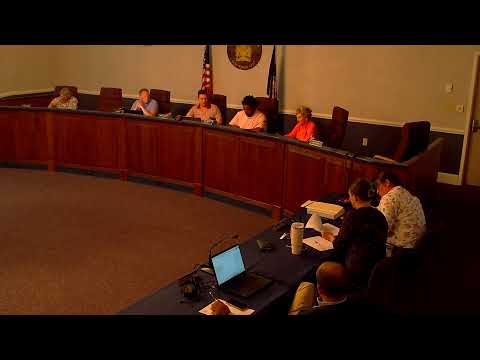
Waynesboro planning commission backs updates to Chapter 74 subdivision ordinance; staff to refine access, pedestrian and fire provisions
Summary
The Waynesboro Planning Commission on Tuesday approved proposed amendments to City Code Chapter 74 to align the subdivision ordinance with changes in the Code of Virginia, add cottage‑housing compatibility, update bonding rules, and require pedestrian crossings and a secondary access for sizable residential developments.
The Waynesboro Planning Commission on Tuesday approved proposed amendments to City Code Chapter 74, the subdivision ordinance, sending the changes forward with a request that staff consider refinements on multi‑point access thresholds, fire apparatus language and pedestrian‑crossing implementation.
City planning staff said the update is intended to bring the ordinance into compliance with recent changes in the Code of Virginia, incorporate rules needed to allow cottage‑court housing subdivisions, clarify bonding and release procedures, and add administrative fixes. Staff said the new state law effective July 1 moves preliminary‑plat approval authority from the planning commission to the locality’s subdivision agent, which in Waynesboro is the subdivision agent at city hall; the proposed ordinance text updates references accordingly and shortens statutory review timelines.
The amendments also add three notable local changes: language allowing the city engineer and public‑works staff to permit street grades steeper than 6% for specific sites where topography or rock make 6% impractical; a requirement that pedestrian crossings compliant with city standards be provided at new street intersections and where sidewalks, bike trails or greenways are required; and a provision requiring a secondary means of access for developments that contain 30 or more residential units, to align with the Virginia Statewide Fire Prevention Code’s secondary‑access standard.
“These changes bring us into alignment with new Virginia code requirements and fix several administrative inconsistencies in the ordinance,” a city planner said during the presentation. Staff also described updates that clarify bonding calculations and partial bond release procedures to match state code and added supportive language encouraging native plantings in preservation areas.
Commissioners discussed the practical implications of the secondary‑access threshold and whether the ordinance language should require a secondary means for fire apparatus, a full second ingress/egress for vehicles, or a tiered approach. Commissioners noted that a strict requirement for two full public entrances in every development over a set unit count could be costly or infeasible in some sites and asked staff to consider a tiered threshold and clearer language that references fire apparatus access and larger residential complexes.
Commissioner Gibson and others asked staff to revisit the wording so that the provision applies to “residential units” broadly (including multifamily) and so that it is clear whether the requirement is for a secondary access that is suitable for fire apparatus rather than a permanent second public street in every case. Staff said they would work with the fire department and city engineer to refine the language.
On pedestrian crossings, commissioners asked how the new requirement would be applied at high‑speed arterial crossings and whether it would obligate developers to install signalized crossings if receiving infrastructure exists on the opposite side of the street. Staff said traffic‑engineering review would determine appropriate treatments, and that adding the pedestrian‑crossing language to the ordinance gives the city a clearer legal basis for requiring compliant crossings when a development brings sidewalk or greenway connections to an intersection.
Commissioners voted to approve the ordinance amendments as presented, with the commission’s suggestion that staff consider a tiered approach for secondary access, revisit the fire‑apparatus phrasing, and clarify pedestrian‑crossing application. The motion passed on a voice vote.