Get Full Government Meeting Transcripts, Videos, & Alerts Forever!
Get email alerts on the Trees Hedges Shrubbery topic
No spam. Unsubscribe anytime.
Committee discusses sight-line rules, hazardous-tree enforcement and contractor rules in trees, hedges ordinance
Summary
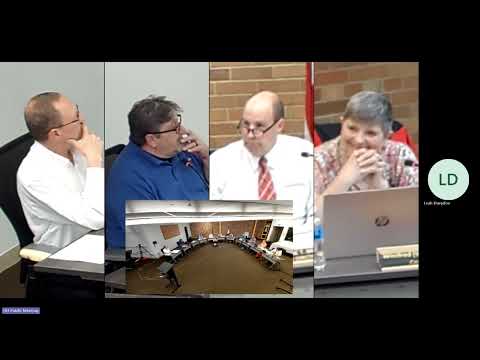
The University Heights joint Service & Utilities and Building & Housing Committee discussed proposed amendments to Chapter 10.72 of the codified ordinances governing trees, hedges and shrubbery, focusing on sight-line safety, hazardous-tree abatement and contractor registration.
The University Heights joint Service & Utilities and Building & Housing Committee discussed proposed amendments to Chapter 10.72 of the codified ordinances governing trees, hedges and shrubbery, focusing on sight-line safety, hazardous-tree abatement and contractor registration.
Committee members said the measure is intended to address safety concerns where vegetation grows close to sidewalks and corners and can block drivers’ views. Committee discussion centered on whether a fixed height standard — cited repeatedly in the meeting as 30 inches — is the best way to measure sight-line obstruction or whether distance from the sidewalk and standard sight-triangle measurements should be used instead.
Members noted that the Ohio location design manual (site-triangle guidance keyed to posted speed limits and assumed vehicle positions) is commonly used to set sight-distance standards, and the committee discussed whether the city should adopt a comparable approach for hedges and shrubs that block corner visibility.
The committee heard that existing code already treats some hedges as fences in certain contexts, and that the building commissioner currently has discretion to determine whether particular plantings present a hazard. Members said citations for vegetation-height violations are rare under present practice.
The draft ordinance also includes provisions for hazardous trees on private property: if a building commissioner or housing inspector identifies a tree that is dead, diseased, obstructing traffic controls or otherwise a safety threat, the city may order abatement; if the owner does not comply, the city can remove the hazard and assess costs to the property, or pursue civil remedies. Committee members asked staff to clarify how inspectors will determine hazard and whether arborist input will be used where tree health is in dispute.
Committee discussion addressed penalties and due process. The draft allows inspection-based orders with an appeals path to the Board of Zoning Appeals; it also retains civil remedies and criminal penalties as options for severe noncompliance, but several members emphasized that criminal charges are not intended for routine homeowner violations and that assessments placed on the tax duplicate are a practical tool for cost recovery.
Several members urged the committee to keep enforcement discretionary and focused on current or newly installed plantings rather than automatic removal of long-standing mature hedges. Members also raised the practical burden of enforcing a strict universal height standard across the city’s varied lot sizes and tree-lawn widths.
On procedure, the committee directed the law director’s office to incorporate the day’s edits and circulate a revised draft to the joint committees for another review and to schedule a public hearing once the consolidated draft is prepared. No formal vote was taken on the ordinance at this meeting; the item remains under committee review and subject to further revision.
Ending: Committee members asked staff to return a clarified draft showing where standards reference the Ohio guidance and where discretion by the building commissioner or a certified arborist would apply, then to circulate that draft to members before a public hearing is scheduled.