
Rangeley committee advances dark‑sky lighting ordinance, narrows retroactive requirements
Get AI-powered insights, summaries, and transcripts
Sign Up Free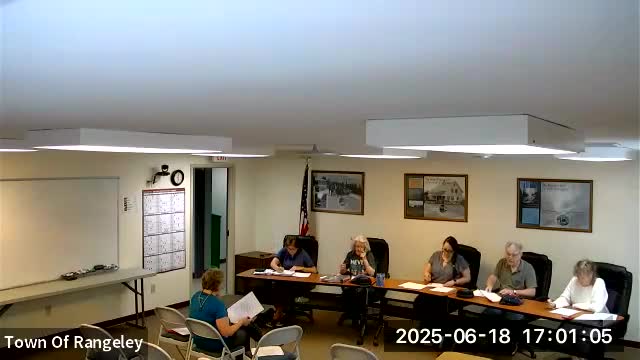
Summary
The Rangeley Ordinance Committee on June 18 edited and approved multiple sections of a proposed dark‑sky lighting ordinance, removing a specific parking‑lot pole‑height limit, aligning setbacks for freestanding poles with existing zoning setbacks, and lowering a small‑fixture lumen exemption from 1,600 to 1,000 lumens.
RANGELEY, Maine — The Rangeley Ordinance Committee on June 18 edited and approved multiple sections of a proposed dark‑sky lighting ordinance, voting to remove a specific parking‑lot pole‑height prescription, to tie setback rules for freestanding poles to existing zoning‑district setbacks, and to lower a small‑fixture lumen exemption from 1,600 to 1,000 lumens.
The committee’s vote followed a legal opinion the group received from the town attorney that the revised dark‑sky language “would survive any challenge,” and a lengthy discussion about whether and how the ordinance should apply to existing lighting.
Committee members said the changes aim to reduce upward light spill while avoiding undue retrofit costs for current property owners. The committee struck a targeted provision that would have capped parking‑lot pole heights and instead approved language to require setbacks for freestanding poles “in compliance with the zoning district setbacks.”
“I’m glad the lawyer got back to us,” said Marty (Ordinance Committee member). “In Kristen Collins’ opinion, this language would survive any challenge. With zoning, we’re mostly worried about whether a restriction takes away from property value.”
Several members objected to retroactive requirements for existing fixtures. “I don’t like anything that does retro,” said Scott (Ordinance Committee member). He urged the committee to differentiate between seeking formal Dark Sky certification and adopting rules that are “Dark Sky friendly” but do not force immediate retrofits.
After debate, the committee voted to: accept the general standard (with a minor wording edit to remove the phrase “in the town” from one sentence); strike a specific parking‑lot light‑height line; replace a fixed pole‑height/setback formula with a requirement that freestanding light poles meet the zoning district’s setbacks; lower the lumen exemption threshold from 1,600 to 1,000 lumens; retain a 5,000 lumens‑per‑acre cap for non‑fully shielded fixtures; permit limited flagpole uplighting consistent with another section of the chapter; and add an exemption for lighting of house‑of‑worship steeples or other tops-of‑worship structures.
Votes and motions recorded in the meeting included a 4‑0‑1 vote to approve the amended general standard paragraph, unanimous approval to remove the parking‑lot height clause, and a motion to change setback language that passed with three in favor, one opposed and one abstention. The lumen threshold change was approved unanimously.
Committee members also approved prohibitions on uplighting (with limited exceptions for flagpoles and approved exemptions), on flashing or intermittent display lighting (holiday lighting excepted), and on searchlights, laser‑source lights and similar high‑intensity fixtures.
Carolyn (Ordinance Committee member) pushed for clarity about which types of properties the standards would govern. “If I was reading this, not having been involved with this, I would think this doesn’t apply to me,” she said, arguing the ordinance should make its geographic and use coverage clear.
Linda (Ordinance Committee member) and others noted existing code references — for example, Chapter 38 already includes building‑height comparisons and related setback language — and the committee adjusted language to avoid conflict with those existing provisions. Members repeatedly emphasized they wanted the ordinance to focus on preventing unnecessary upward light while avoiding measures that would impose immediate retrofit costs on local businesses and residents.
The committee left some items for further drafting and review — notably a question about whether to retain language that would require existing fixtures to be brought into conformance within a specified period. One member proposed that nonconforming fixtures be required to meet the new standard only when replaced or substantially renovated; the committee did not adopt a uniform retroactivity timeline in this meeting.
Legal and administrative references discussed at the meeting included the town attorney’s written opinion (provided to the committee during the meeting), the proposed Chapter 38 dark‑sky language (identified in the discussion as Section 38‑8‑2 / the lighting chapter), and general Dark Sky certification standards as a policy reference. Committee members noted an upcoming special town meeting date had been discussed by other town bodies, but the scheduling and final agenda timing remained unsettled during the June 18 meeting.
The committee scheduled further work and said it will bring the revised text back for additional review before a public hearing and possible inclusion on a future special town meeting warrant. The group noted tentative next dates for the committee’s meetings and sign ordinance work were discussed at adjournment.
Ending — Next steps: The committee will circulate the revised draft language for further editing, address remaining retroactivity and technical detail questions, and reconvene; members mentioned a planned July meeting as a next step and said public hearing scheduling will depend on final language and coordination with the selectboard’s special‑town‑meeting calendar.