Rangeley officials debate 24/7 police coverage, use of fund balance after voters reject budget
Loading...
Summary
At a joint Selectboard and Budget Committee meeting, town officials discussed next steps after voters rejected the police department budget, debating a special town meeting, use of the town's undesignated fund balance and operational changes including vehicle policies and schedules.
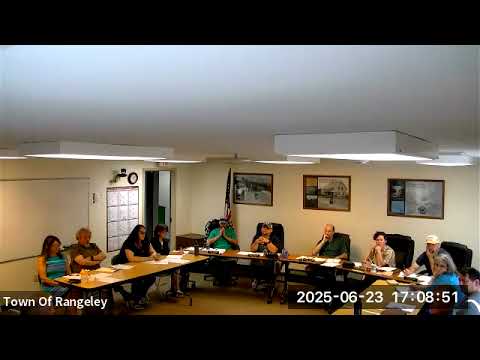
Rangeley -- Selectboard members and the Budget Committee spent more than two hours discussing the future of the town's police department after voters rejected the department's budget, focusing on whether to schedule a special town meeting, how to cover an estimated $232,000 increase in recurring costs, and operational changes including take-home vehicle policy, shift schedules and vehicle wear.
The discussion matters because voters' rejection left the town without an approved budget for police operations and because town officials said the department's staffing model and vehicle policy affect both public safety and long-term taxes.
Town staff presented call-volume data and financial context. Officials said officer-initiated activity increased markedly year over year: between Jan. 1 and May 30 the prior year the department logged about 352 dispatched calls and 741 officer-initiated incidents; in the same span this year dispatch-called incidents rose to about 425 and officer-initiated incidents to about 2,086. Town staff also noted that Rangeley logged roughly 400 calls per month recently, which they said supports a continuous police presence.
Officials discussed options to cover the shortfall. Town staff explained the town has an undesignated fund balance of about $5.5 million and that using some of those reserves could absorb the recurring increase for a limited time. Several participants pushed back, saying the fund balance is taxpayer money intended partly to smooth taxes over multiple years and warning that repeated use to subsidize operating budgets would reduce future flexibility.
Operational issues drew sustained attention. Officials and the police chief discussed take-home cruisers and mileage costs: state mileage reimbursement was cited as 54 cents per mile; the longest commutes for some officers were described as about 56 miles one way, producing an estimate of roughly 200'00'00—00 miles per week for officers traveling multiple days. Councilors and committee members raised concerns that frequent long-distance use will accelerate wear and increase replacement costs and suggested the town may need to adjust vehicle-replacement reserves.
The meeting also reviewed recent scheduling and pay changes. Town staff described the department's current staffing model as 18-hour on-duty stretches within a 24/48-hour pattern and said a $100-per-day stipend is paid to officers to remain in town during off hours; the contract language and shift pattern were cited as drivers of built-in overtime costs. Budget documents shown at the meeting included line items for built-in overtime, vacation and training coverage; staff said those lines were included because the town cannot predict how often sick leave, training or vacancies will require overtime coverage.
Participants pressed for alternatives. Several members asked the town to get formal proposals from the Franklin County sheriff's office to compare costs and coverage, to re-examine the department's schedule, and to explore regionalization options or a hybrid administrative/patrol chief role. Budget committee members said they would revisit their earlier recommendation and produce a new number for the board and for voters to consider.
Next steps discussed at the meeting included scheduling a special town meeting and additional public hearings so voters can weigh revised budget options. Town staff said the board had scheduled a special town meeting for Aug. 19 at the polls; committee members and selectpersons asked staff to present alternative budget figures and to solicit a written cost proposal from the county for designated coverage so residents can compare options ahead of any new vote.
Many speakers emphasized the political and community context: Rangeley has a large portion of property value held by nonresidents who pay taxes but do not vote in municipal town meetings, and several participants asked the town to improve public outreach and transparency before putting another budget question to voters.