Commissioners debate allowing taller warehouse buildings near I‑840 as Hillwood seeks flexibility
Loading...
Summary
County staff presented a Hillwood concept plan for light industrial and distribution development near the I‑840 interchange and asked the planning commission whether to allow taller industrial buildings or require case‑by‑case PUD approvals.
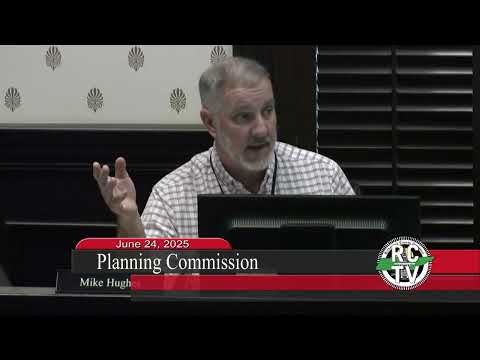
Rutherford County planning staff on June 24 presented a conceptual plan from Hillwood for industrial and distribution development near the I‑840 interchange and asked the planning commission for feedback about whether the county should consider raising the maximum allowed building height in industrial districts.
The developer approach described to the commission would seek flexibility to construct buildings up to about 60 feet tall in parts of the concept area; staff said Hillwood prefers a planned development application rather than a text amendment but that the proposed PUD would primarily change height limits rather than a detailed site layout. "What they're showing here is conceptual. They don't want to be locked into a specific design. They just want to have the ability to have slightly higher buildings than what is allowed in the industrial zones in the county currently," planning staff said.
Commissioners raised several concerns: how a county‑wide height change would affect properties already zoned industrial, the potential view‑shed impacts on nearby residential areas, architectural and landscaping standards for taller industrial buildings, and fire‑code and apparatus response issues. The county fire marshal said Rutherford County will take delivery of a new ladder truck (aerial device) expected in 2026 with reach over 100 feet, but noted that ladder apparatus are not typically the primary initial firefighting asset for interior attacks. "We should be well prepared for that," the fire marshal said of ladder capability.
Several commissioners said they would prefer to retain the current 40‑ to 50‑foot height limits and ask developers to seek exceptions via a PUD or special application so the county can negotiate design mitigations such as stepped massing, architectural treatments, screening and landscape buffers. "I would be open to looking at something higher. But just to grant something more than 40 feet, it's pretty big ask," one commissioner said, urging a stepped‑design and stronger landscaping and architectural standards.
Staff cautioned that a text amendment increasing industrial heights would apply to all parcels zoned in those districts, immediately allowing any property rezoned under the change to use greater height limits. "If we make the change for what’s allowed in these different categories, any property that has been rezoned to these would automatically be able to," staff said. The alternative, staff said, is a PUD approach or requiring Board of Zoning Appeals variances for individual structures.
Commissioners also asked the developer to explain why taller buildings are needed and whether taller buildings could be used to increase usable square footage without expanding building footprints. Staff and commissioners noted Tennessee rules about school facilities tax and building code limits can constrain how much square footage is chargeable and how building floors and enclosed area are measured. "If you build a 2 story building, it's a thousand foot on 1 floor and a thousand foot on the other. You've got 2,000 square foot building," staff said, noting floor‑area calculations vary with building design.
No formal action was taken; staff said Hillwood had indicated plans to apply soon and would be advised by staff to consider a PUD application. Commissioners asked for more information on why the developer needs taller buildings, likely design standards if taller heights were allowed, and potential impacts on nearby residential parcels and county infrastructure.