Get email alerts on the Drainage Obstruction topic
No spam. Unsubscribe anytime.
Hamilton County drainage board orders homeowner to remove earthen berm blocking surface flow
Summary
After a petition by Herschel Cox, the Hamilton County Board of Drainage found an earthen berm on Gary Ashley’s property obstructed a natural surface water course and ordered its removal, with the property owner given 45 days to comply.
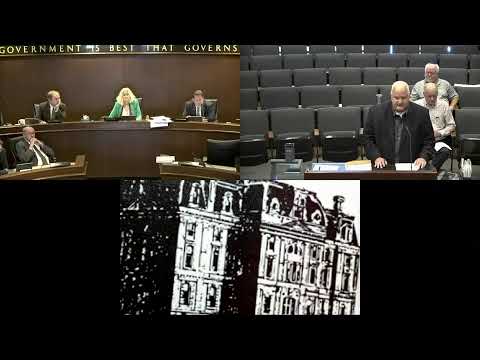
The Hamilton County Board of Drainage on June 30 ordered the removal of an earthen berm that county investigators concluded obstructs the natural surface flow between adjoining yards in Noblesville.
The board heard a petition filed April 4 by Herschel Cox alleging a blocked surface water course on property owned by Gary Ashley at 22404 Craig Avenue. The county surveyor’s office reported an investigation found soil and a wooden privacy fence placed along Ashley’s parcel created an earthen dam that blocked the historic east–west surface flow across the properties.
The board’s order cites the county’s findings under state drainage statutes referenced by staff as IC 36-9-27.4, including definitions of a natural surface water course and obstruction. County photographs dated May 2 showed soil placed against the fence on Cox’s property and a raised berm that staff said prevents flow from the west to the east.
Gary Ashley told the board the material was placed to keep small dogs from entering his yard and said he had installed a temporary 4-inch drain pipe after receiving a letter from Cox in February. Ashley acknowledged the mound was present but denied an intent to block drainage. He said the drain he installed emptied his side within 24 hours after a recent storm but that larger, ponding events can exceed its capacity.
Board members said there is a record of Hamilton County Sheriff’s Department and animal-control calls related to the prior dog problem; board staff said those reports supported the conclusion the berm was not placed specifically to block water. The board also heard testimony from nearby residents about recurring pooling in the area and from the surveyor’s office regarding historical flow patterns visible in aerial imagery and topographic records.
The board voted to find that an obstruction existed, that removal would improve drainage on the petitioner’s land without causing unreasonable damage to respondent land, and that the obstruction was not intentionally created to block drainage. The board ordered the respondent to remove the portion of dirt that obstructs the natural surface flow; the Ashleys were given 45 days to complete the work. The order also directed the surveyor’s office to mark the specific section to be removed and to coordinate with the property owners on the work.
Board members stressed that removal of downstream obstructions beyond the immediate berm would require separate petitions from downstream property owners or a regulated-drain process; they recommended neighbors work with the surveyor’s office if they wish to pursue additional clearing downstream.
The board took the action by motion and unanimous voice vote.
AI generated
The text on this page is AI generated. Summaries, highlights, analysis, and video transcripts are all produced from the original source material.
AI can make mistakes, so if you spot one, and we will fix it for everyone.
Note: the source content is unaltered by us. Any content source we link to, be it a video, an audio recording, or a document, is presented exactly as its publisher released it. That publisher is usually a government body, sometimes an individual official or another organisation.